Imām Muḥammad b. ʿAbd al-Wahhāb states in “The Three Fundamental Principles” that the second piece of knowledge we are obligated to learn is about our Prophet Muḥammad ﷺ.
Sh. Ibn Bāz, may Allāh have mercy upon him, adds the nisbah (ascription) “Makkī then Madanī” to the nisbah of the Prophet ﷺ.
The Prophet ﷺ is from Banū Hāshim from the tribe of Quraysh. Hence the nisbah al-Hāshimī al-Qurashī. He was born in Makkah and lived there for approximately 53 years, before he was instructed by Allāh to emigrate to al-Madīnah. He lived in al-Madīnah for 10 years and died there at the age of 63. And so, he was a Makkan, and a Madīnan.
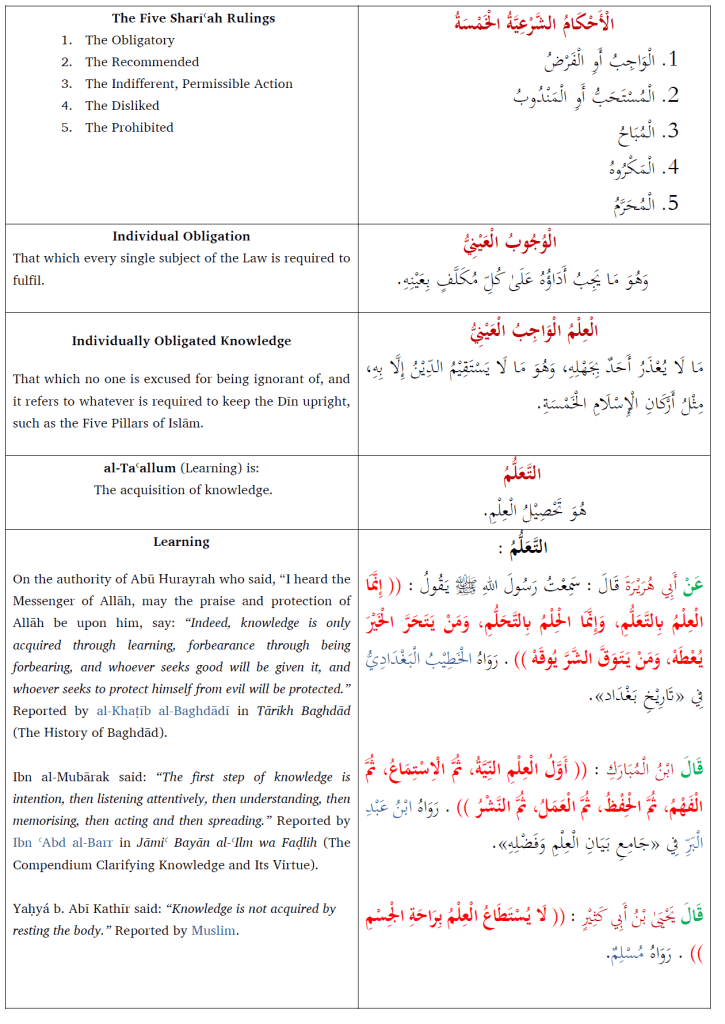
Imām Muḥammad b. ʿAbd al-Wahhāb states in “The Three Fundamental Principles” that the first knowledge one must acquire is that of Allāh.
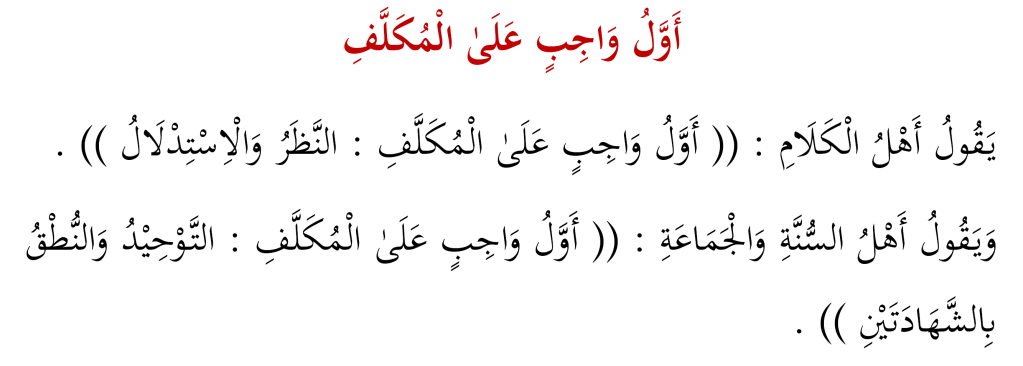
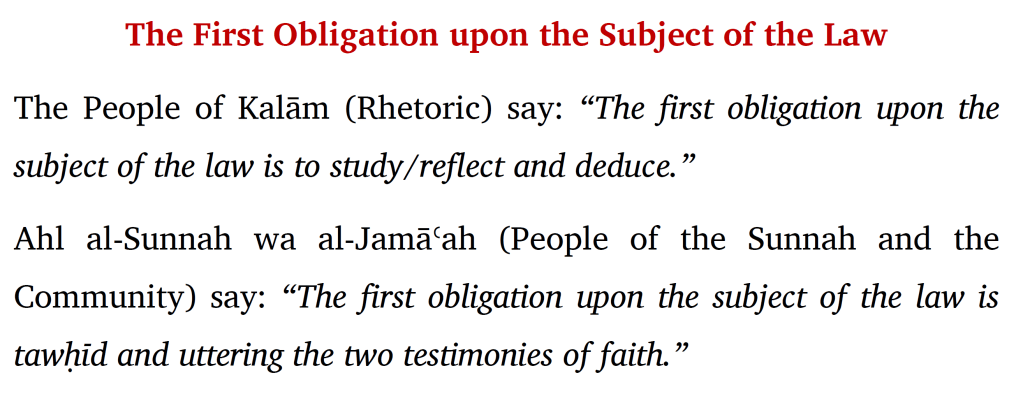
The People of the Sunnah, in contrast to the People of Innovation, follow the principle that: the first obligation upon every person is to learn about the tawḥīd of Allāh and then to state the two testimonies of faith:
The proof for the position of the People of the Sunnah is the ḥadīth of Muʿādh b. Jabal, may Allāh be pleased with him. When the Prophet ﷺ sent him to Yemen, he commanded him to firstly call the people to tawḥīd and to state the two testimonies of faith, before anything else. [See: al-Bukhārī (7372) and Muslim (19) for instance].
The People of Rhetoric require every legally capable person (mukallaf), to firstly expend their intellectual efforts in establishing the existence of a creator, utilising the logical maxims and rules developed by Hellenic philosophers, which were later dilated on by Arab scholars who were influenced by such works. This initial step imposed by the People of Rhetoric on the mukallaf, is contradicted by the ḥadīth that every child is born in a state of natural disposition believing in Allāh [See: al-Bukhārī (1358) and Muslim (2658) for instance].
Note: this does not mean one should not use his intellect in reflecting upon the creation of Allāh, and making deductions about how the beauty and uniformity of the creation is an indication of the greatness and oneness of the Creator. This particular principle mentioned here, is to point out how the People of Rhetoric, contradict the Sunnah regarding what the first obligation is upon the mukallaf. A deeper discussion on this issue will have to be saved for another time.
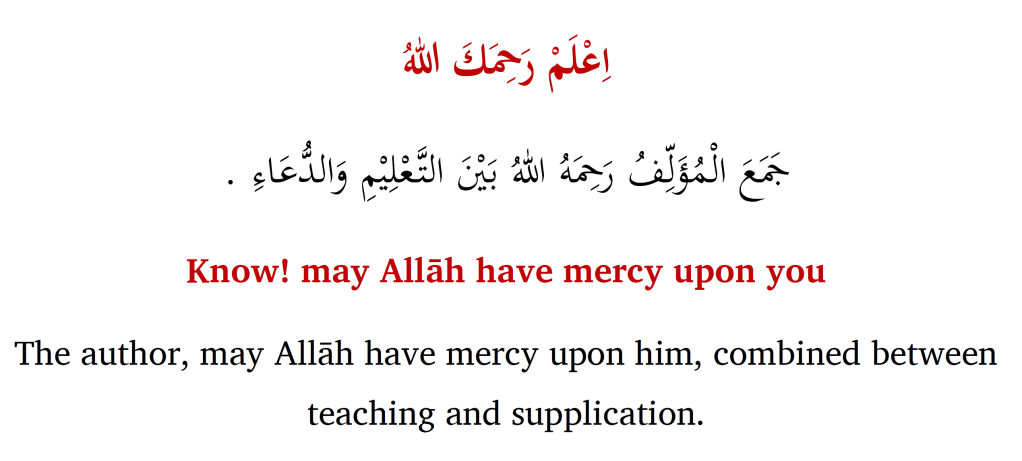
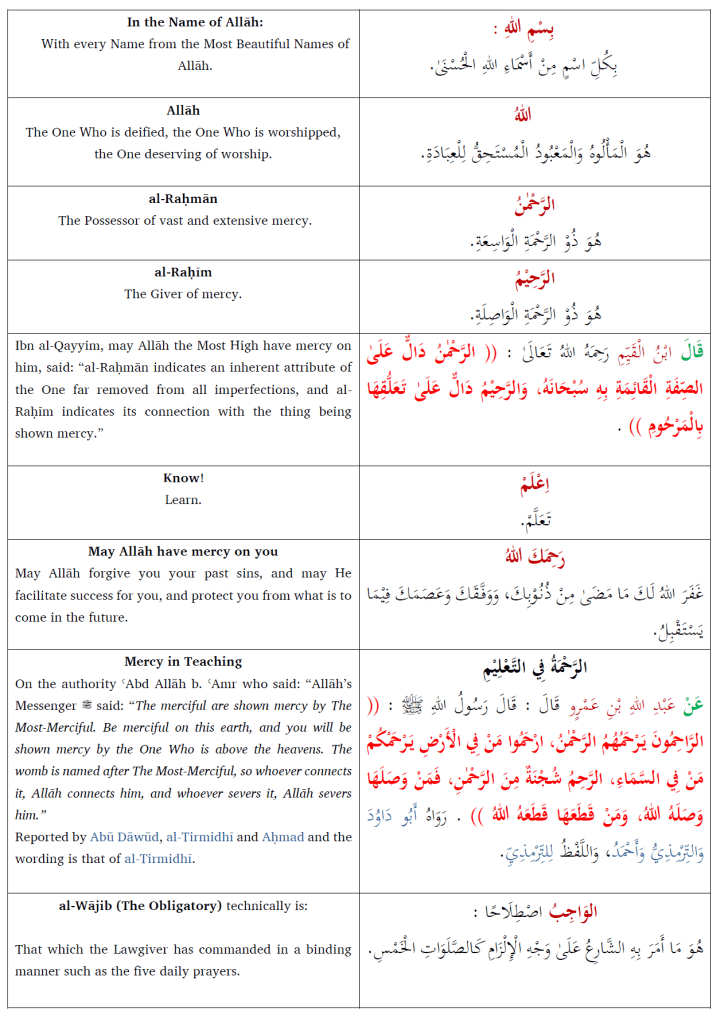
Imām Muḥammad b. ʿAbd al-Wahhāb, may Allāh have mercy upon him, begins Thalāthat-ul-Uṣūl (The Three Fundamental Principles), in quite a unique way. He expresses his care and concern for you, the reader, by instructing you to learn, and then coupling that with a supplication for you:
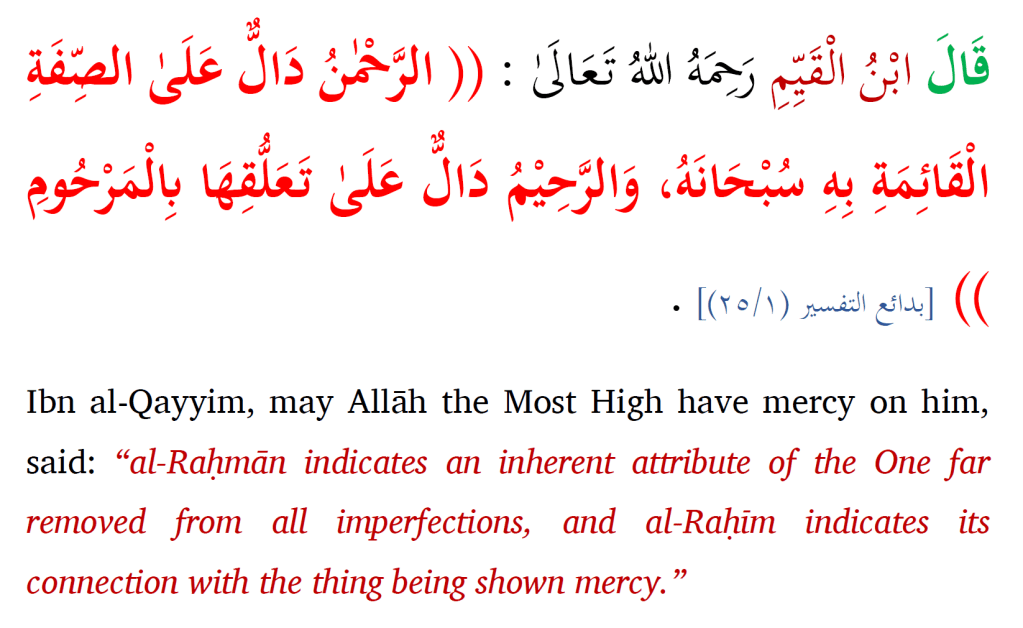
The difference between the two Names is explained succinctly by Ibn al-Qayyim (d. 751):
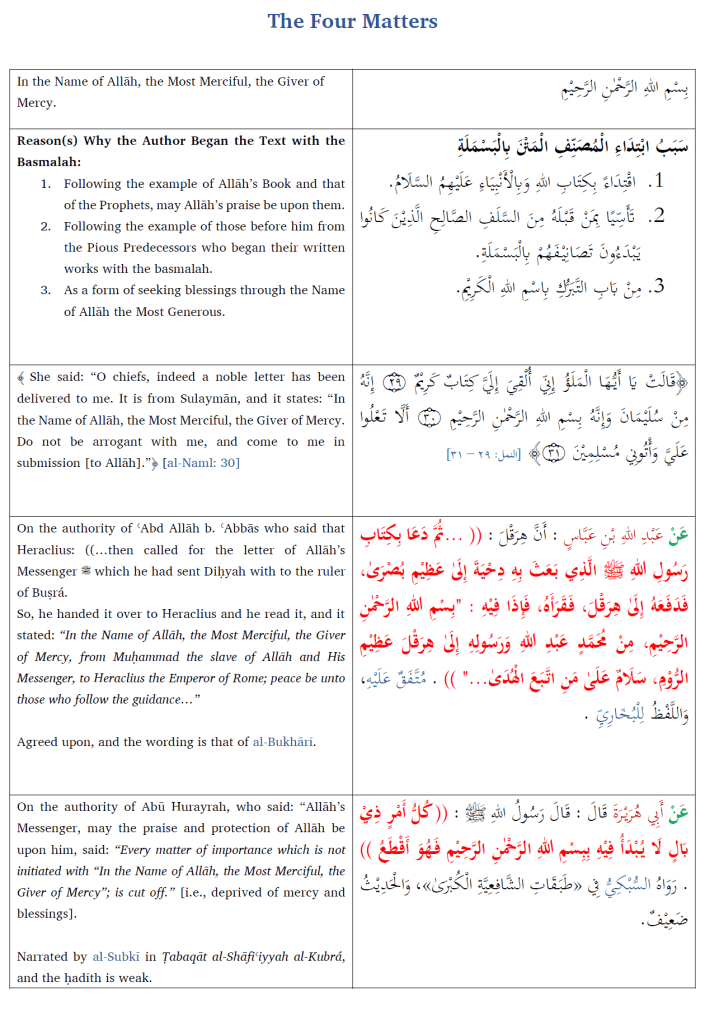
The reason why the author began the matn with the Basmalah is because he is imitating the example set by Allāh in His Book, in which each Sūrah (chapter) begins with it, except for Sūrah al-Tawbah. The Prophets of the past also began their letters with the Basmalah. The proof from the Qurʾān is the letter of Sulaymān, may Allāh’s praise and protection be upon him, which he sent to a ruler and which began with the Basmalah:
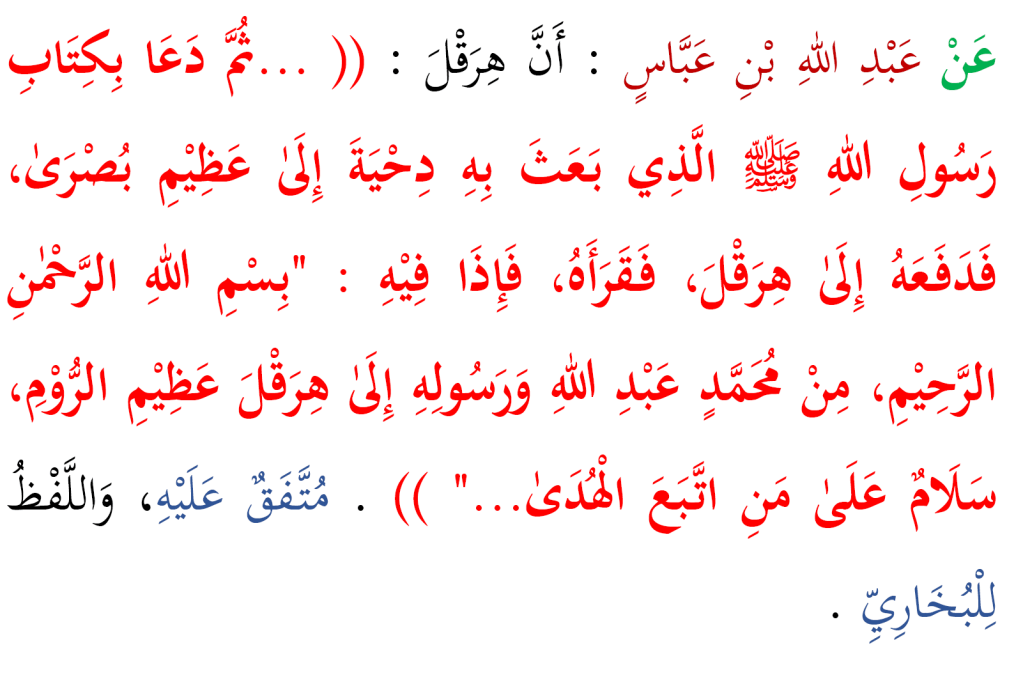
The author is also imitating the practice of the Prophet ﷺ in beginning his letters with the Basmalah:
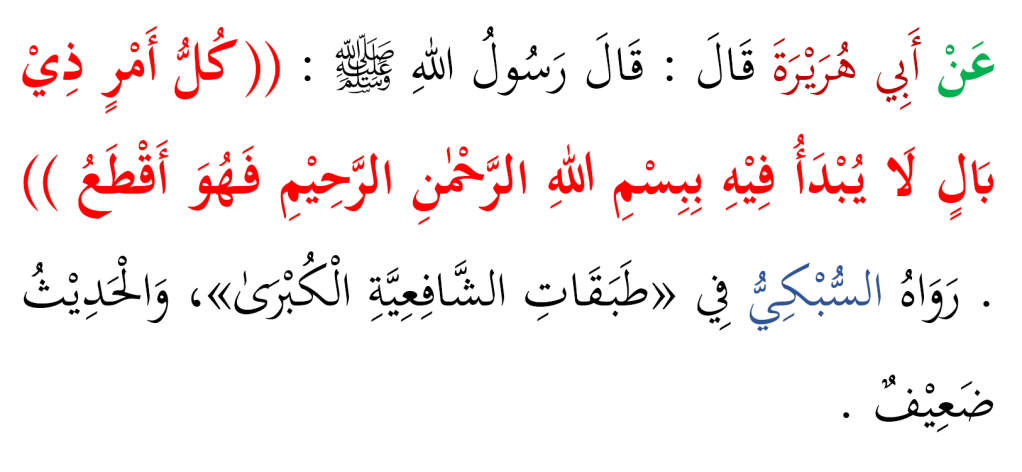
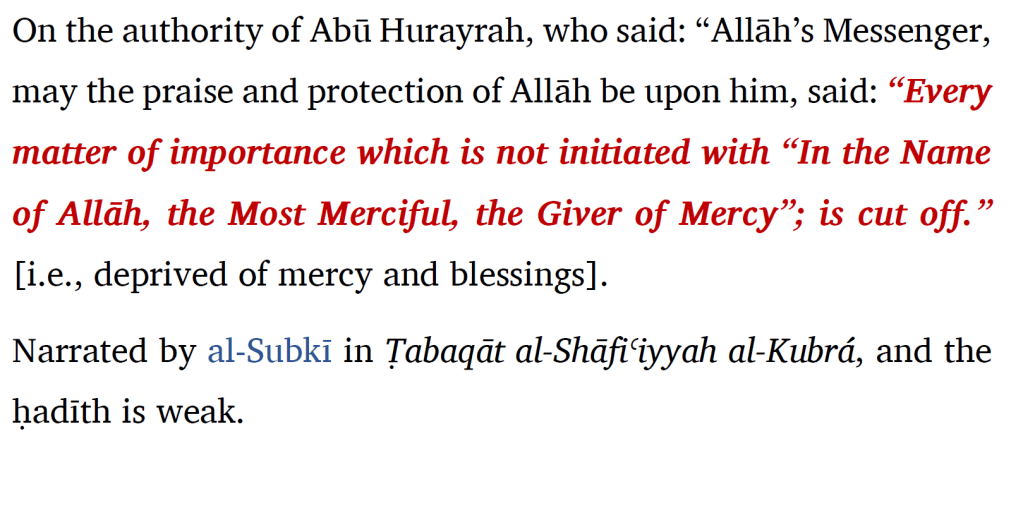
When mentioning the virtues of the Basmalah, some scholars cite the following ḥadīth which is weak and thus carries no probative force:
Sh. Ibn ʿUthaymīn (d. 1421), may Allāh have mercy upon him, was asked whether it was better to memorise a study-text (matn) of jurisprudence (fiqh) or a concise study-text of ḥadīth. The Shaykh responded:
“It is better to memorise a concise study-text of ḥadīth such as ʿUmdat al-Aḥkām and Bulūgh al-Marām, but he should not leave off consulting the speech of the people of knowledge and jurisprudence.”
Majmūʿ Fatāwá wa Rasāʾil al-Shaykh Muḥammad b. Ṣāliḥ al-ʿUthaymīn, vol. 26, p. 185.
Note: Both of the books mentioned by the Shaykh are books dedicated to including aḥādīth of the Prophet ﷺ pertaining to juridical matters such as purification, prayer, zakāh, fasting, ḥajj, buying and selling, marriage, jihād, capital punishments etc.
ʿUmdat-ul-Aḥkām by al-Ḥāfiẓ ʿAbd al-Ghanī al-Maqdisī (d. 600) contains aḥādīth reported by both al-Bukhārī and Muslim only (“agreed upon”). According to the al-Arnāʾūṭ edition there are 430 such aḥādīth. The best commentary is that of Ibn Daqīq al-ʿĪd (d. 702) entitled Iḥkām al-Aḥkām which a beginner may find difficult to grasp. Bulūgh al-Marām of Ibn Ḥajar (d. 852) is at least three times as large and contains 1582 aḥādīth according to al-Zuhayrī’s edition. The Shaykh has his own explanation of Bulūgh al-Marām in 15 volumes entitled Fatḥ Dhī al-Jalāl wa al-Ikrām bi Sharḥ Bulūgh al-Marām.
The Salaf considered knowledge to be what was contained in one’s heart and not in one’s notebooks. Click on the posts below to learn more about the importance of memorising knowledge and its related matters:














 Salafi Knowledge