الحمد
Shaykh al-Saʿdī states in his poem on legal maxims entitled Manẓūmat al-Qawāʿid al-Fiqhiyyah:
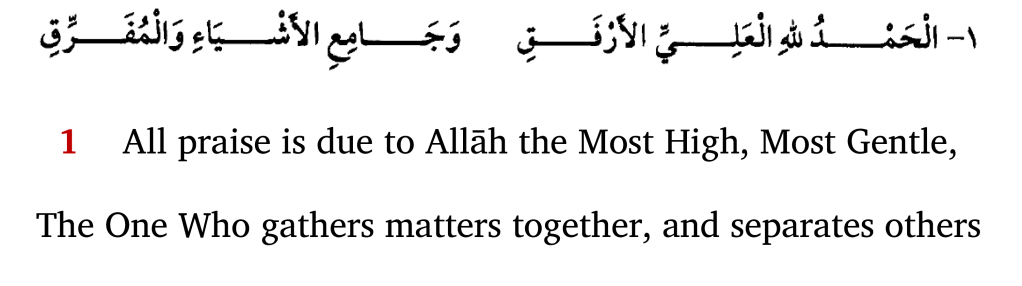
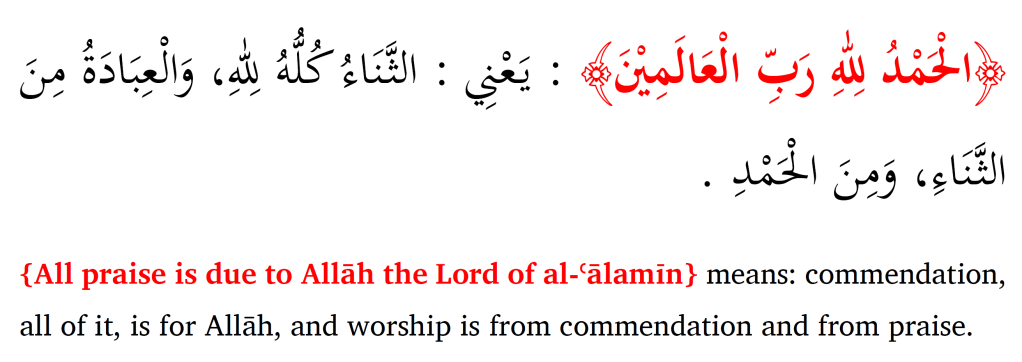
al-Ḥamd: we praise Allāh because of the His perfect attributes, the blessings with which He has showered us, the vastness of His generosity and uniqueness of His wisdom. We praise Allāh because He is perfect in His Names, Attributes and Actions. All of His Names are absolutely beautiful and contain no blameworthy connotations. All of His Attributes are perfect from every angle and contain no defects or flaws. All of His Actions are beautiful because the revolve around justice and perfect kind treatment. This is why He is deserving of all praise.
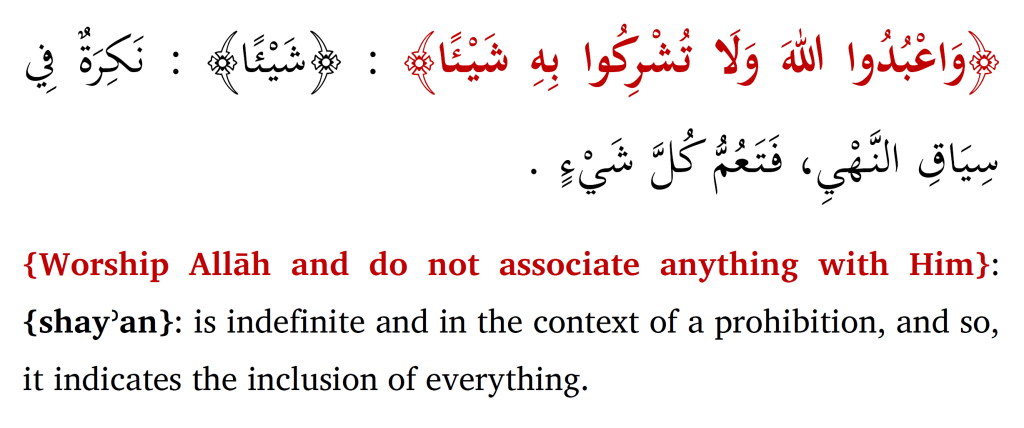
Allāh: the One Who is deified (treated as a deity) and is worshipped, is deserving of being worshipped with all kinds of worship, and nothing is to be associated with Him due to the perfection of His praise.
al-ʿAlī: the One Who has absolutely perfect Highness from every aspect: Highness in Essence, power/estimation and subjugation.
al-Arfaq: He is the gentlest in His actions, and His actions involve the utmost degree of gentleness when it comes to our interests and His wisdom.
((The One Who gathers matters together, and separates others)): Allāh has brought together and gathered things which are similar in one thing and He has also separated things which are different in another. As humans, we share, along with everything else in the universe, of being created by Allāh. So, we share in being created. However, Allāh separated and made a distinction between us in our shapes, sizes, being tall, short, black, white, handsome, ugly etc.
Everything that Allāh does emanates from the perfection of His ability and wisdom, and in placing things in their appropriate places. And Allāh knows best.
The Author
The Poem – click on a line to see explanation (still being updated as of Dhul-Hijjah 1443):
02 Possessor of Blessings and Wisdoms
03 Praise and Protection on the Messenger
04 And His Followers
05 Greatest Blessing: Beneficial Knowledge
06 Benefits of Beneficial Knowledge
07 Understand these Maxims
08 Following the Successful Ones
09 Source of Poem
10 Supplication for Predecessors
11 The Intention (al-Niyyah)
12 Public Interests
13 When Public Interests Coincide
14 When Corrupting Matters Coincide
15 The Sharīʿah is Ease
16 No Obligation Without Ability
17 Dire Necessity Makes the Prohibited Permissible
18 Certainty is Not Removed by Doubt
19 Water, Earth, Clothing and Stones are Pure
20 Matters Prohibited by Default
21 Unless Evidence of Permissibility Exists
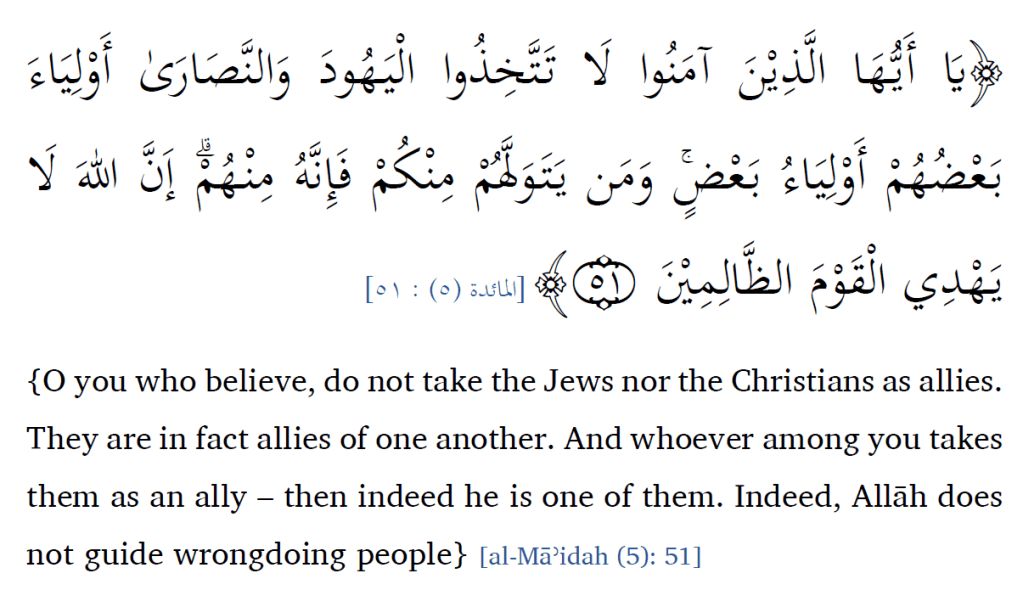
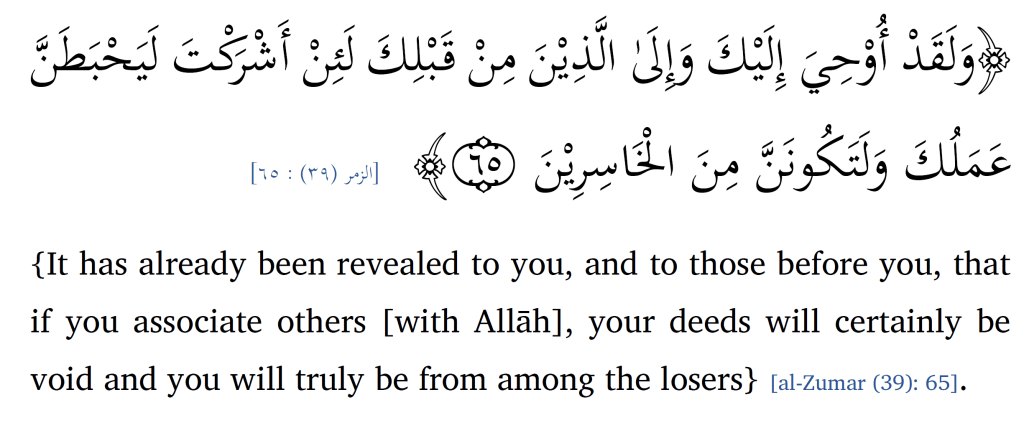
Sh. Ibn Bāz says regarding these verses:
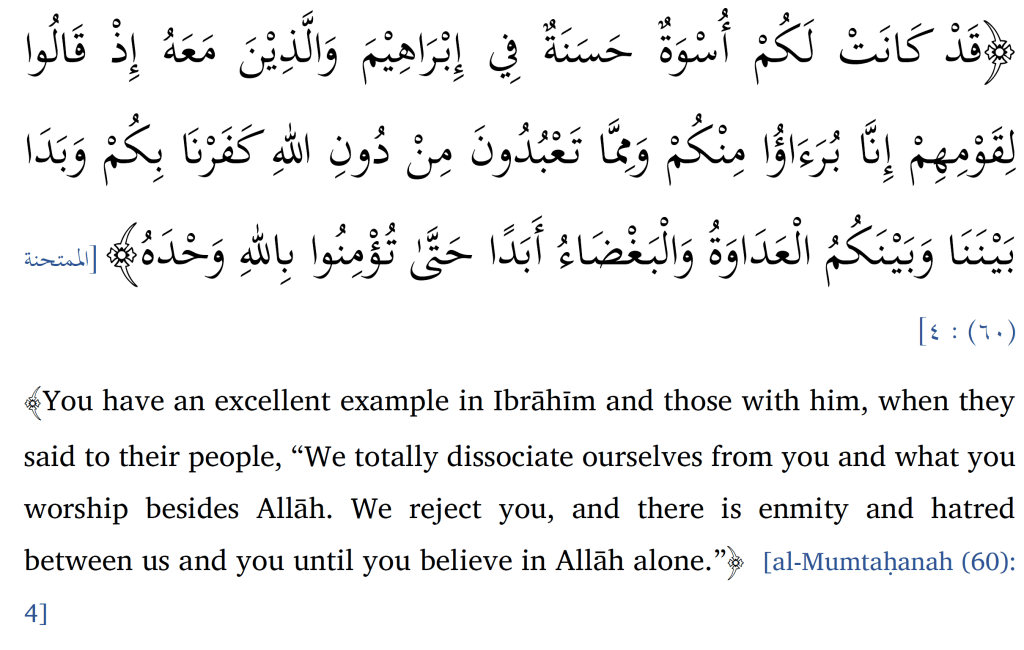
In explaining the proof for al-Walāʾ wa al-Barāʾ (love, loyalty and allegiance to Allāh, and hatred, enmity and disassociation for His sake), Sh. Ibn Bāz states: