The Salaf and Their Parents

Abū Hurayrah (d. 59) saw two men and said to one of them, “Who is this to you?” He replied, “My father.” He said, “Do not call him by his name, do not walk in front of him, and do not sit before him.”

Abū Ḥāzim al-Ashjaʿī (c. 100) was a close companion of Abū Hurayrah and is said to have spent half a century with him. He said, “Abū Hurayrah did not perform Ḥajj until his mother passed away.”

ʿAbd Allāh b. ʿUmar (d. 74) saw a Yemenī man going around the Kaʿbah while carrying his mother on his back, saying, “I am her humble camel, if her mount is frightened, I am not frightened.” He then said, “O Ibn ʿUmar! Do you think that I have repaid her?” He replied, “No! Not even one groan!”

Ḥafṣah bt. Sīrīn (c. 100), the sister of Muḥammad b. Sīrīn (d. 110) said, “When Muḥammad would enter upon his mother, he would not speak to her with his whole tongue out of shyness towards her.”

Ibn ʿAwn (d. 151) said, “When Muḥammad b. Sīrīn (d. 110) would be in the presence of his mother, he would lower his voice and speak gently.”

Hishām b. Ḥassān said that someone from the family of Sīrīn said, “I never saw Muḥammad b. Sīrīn talking to his mother except while (he seemed) abased.” [Ḥilyah (2: 273)].

A man entered upon Muḥammad b. Sīrīn while he was in the presence of his mother, so he said, “What’s the matter with Muḥammad, is he suffering from something?” They said, “No, this is just how he is when he is in the presence of his mother.” [Ḥilyah (2: 273)].

Bundār (d. 252) said, “I wanted to go travelling (to seek ḥadīth) but my mother prevented me so I obeyed her, and I was blessed due to that.” Allāh blessed him by making him the teacher of the authors of The Six Books: al-Bukhārī, Muslim, Abū Dāwūd, al-Tirmidhī, al-Nasāʾī, and Ibn Mājah.

al-Ḥasan al-Baṣrī (d. 110) was asked about being righteous towards one’s parents and he said, “That you spend on them from what you possess, and you obey them as long as it does not involve sin.”

ʿAṭāʾ was asked about a man whose mother made him swear he would not pray except the obligatory and not fast except the month of Ramaḍān. He replied, “He should obey her.”

Iyās b. Muʿāwiyah (d. 122) cried when his mother passed away. He was asked, “What makes you cry?” He replied, “I used to have two doors to Paradise open for me, but one of them has been shut.”

al-Ashjaʿī (d. 182) said, “We were with Sufyān al-Thawrī (d. 161) when his son Saʿīd came and said, ‘Do you see him (meaning his father)? I have never been harsh with him; indeed, he would call me whilst I would be praying an optional prayer, and I would cut it for him.’”

A man said to al-Ḥasan al-Baṣrī (d. 110), “Indeed I performed Ḥajj (again) and my mother gave me permission for the pilgrimage.” He said, “Sitting with her at her dinner table is more beloved to me than your Ḥajj.”

A man said to ʿAlī b. al-Ḥusayn (d. 94), “You are the most righteous of people and yet we do not see you eat with your mother?” He said, “I fear my hand will go first to what her eyes had already reached, and thus I would be disobeying her.”

ʿUrwah b. al-Zubayr (d. 94) said, “He has not been dutiful to his parents the one who looks at them sharply.”

Manṣūr b. al-Muʿtamir (d. 132) said, “It used to be said that the mother is due three-fourths of kind treatment.” [Ḥilyah (5: 42)]

Saʿīd b. Jubayr (d. 95) said, “I was bitten by a scorpion, and my mother made me promise to seek ruqyah, so I gave the rāqī the hand which had not been bitten as I hated to break my promise to her.” He did this so he could be among the 70,000 who will enter Paradise without any account; one of their characteristics is that they do not seek ruqyah.

Ṭalq b. Ḥabīb (c. 100) used to help his mum with her chores.

Kahmas (d. 149) used to work in plastering every day for two small coins. When evening would come, he would buy fruits and take them to his mother.

ʿAwn b. ʿAbd Allāh reported that ʿAbd Allāh said, “Keep ties with those your father used to keep ties with, for indeed keeping ties with the deceased in his grave is that you keep ties with the one your father used to keep ties with.”

ʿAmr b. Maymūn b. Mihrān said, “I went out with my father guiding him through one of the streets of al-Baṣrah. We came across a streamlet and he was not able to cross it so I lay down and he walked over my back.” [ḤA (4: 82)].

ʿAbd Allāh b. ʿAwn said that his mother called him once, and he responded but raised his voice; he then freed two slaves. [Ḥilyah (3: 39)].

ʿAbd Allāh b. Yūsuf said that Abū ʿAbd Rabb used to buy slaves and free them. One day he bought an old female Roman slave and freed her. She said, “I don’t know where I’m going to stay.” So, he sent her to his house. When he departed from the masjid, he brought some dinner on the way, invited her to eat, and she ate. He then spoke to her and it turned out she was his mother! He immediately invited her to Islām but she refused. Despite that, from that point onwards, he was kind and dutiful to her to the highest degree. One day, when he returned from the ʿAṣr prayer on the Day of al-Jumuʿah, he was informed that his mother had accepted Islam, he fell down in prostration and stayed there until the sun set. [Ḥilyah (5: 160)].

Sources:

Min Akhbār al-Salaf al-Ṣāliḥ by Abū Yaḥyá Zakariyyā b. Ghulām Qādir, pp. 396-400.

al-Tahdhīb al-Mawḍūʿī li Ḥilyat al-Awliyāʾ li Abū Nuʿaym Aḥmad b. ʿAbd Allāh al-Aṣbahānī, prepared by Muḥammad b. ʿAbd Allāh b. Ṣāliḥ al-Habdān, pp. 151-153.
The Breath of the People of the Fire

Anas b. Mālik, may Allāh be pleased with him, reported that the Prophet ﷺ said, “If there were 100,000 or more in this masjid, and among them was a man from the people of the Fire, and he were to breathe and his breath were to touch them: the masjid and those in it would be burnt.” Reported by Abū Yaʿlá.

Graded ṣaḥīḥ by al-Albānī in Ṣaḥīḥ al-Targhīb (3668).

And al-Bazzār narrated it with the wording:

“If there were 100,000 or more in the masjid, then a man from the people of the Fire were to breathe, he would have burnt them all.”

Graded ṣaḥīḥ li ghayrih by al-Albānī.

Why the Angel Mīkāʾīl Stopped Laughing

Anas b. Mālik, may Allāh be pleased with him, reported that the Messenger of Allāh ﷺ said to Jibrīl, “Why have I never seen Mīkāʾīl laughing?” He said, “Mīkāʾīl has not laughed since the Fire was created.” Reported by Aḥmad (13343).

Graded ḥasan li ghayrih by al-Albānī in Ṣaḥīḥ al-Targhīb (3664).

41 Moderation in Sunnah is Better than Striving in Bidʿah

ʿAbd Allāh b. Masʿūd, may Allāh be pleased with him, said, “Moderation in the Sunnah is better than striving in innovation.” Reported by al-Ḥākim.

Ṣaḥīḥ Mawqūf: al-Ḥākim (357), Ibn Baṭṭah in al-Ibānah (201), and al-Marwazī in al-Sunnah (p. 30).

Kicked in the Path of Knowledge

Aḥmad b. Manṣūr al-Ramādī (d. 265) said, “I went out with Aḥmad b. Ḥanbal (d. 241) and Yaḥyá b. Maʿīn (d. 233) to ʿAbd al-Razzāq (d. 211), as their servant.

When we returned to al-Kūfah, Yaḥyá b. Maʿīn said to Aḥmad b. Ḥanbal, “I want to test Abū Nuʿaym (d. 218/19).” Aḥmad said to him, “You don’t want to, the man is trustworthy.” Yaḥyá b. Maʿīn said, “No, I must.”  So he took a piece of paper and wrote 30 ḥadīths on it from the ḥadīths of Abū Nuʿaym, and he placed at the head of every ten traditions, a ḥadīth that was not from his ḥadīths.

They then came to Abū Nuʿaym and knocked on the door, so he came out and sat on a clay bench opposite his door. He took Aḥmad b. Ḥanbal and sat him on his right, and he took Yaḥyá b. Maʿīn and sat him on his left, then I sat below the bench.

Then Yaḥyá b. Maʿīn took out the sheet of paper and read ten ḥadīths to him while Abū Nuʿaym stayed silent. He then read the eleventh, and Abū Nuʿaym said, “This is not from my ḥadīth – cross it out.” He then read the second ten while Abū Nuʿaym stayed silent. Then he read the second ḥadīth and Abū Nuʿaym said, “This is not from my ḥadīth – cross it out.” Then he read the third ten and read the third ḥadīth, and Abū Nuʿaym changed and his eyes rolled backed. He turned to Yaḥyá b. Maʿīn and said, “As for this one – and Aḥmad b. Ḥanbal’s forearm was in his hand – he is too pious to do something like this, and as for this one – meaning me – he is too insignificant to do something like this, but this is your doing o doer!” He then took out his leg and kicked Yaḥyá b. Maʿīn, knocking him off the bench. He then got up and entered his house.

Aḥmad said to Yaḥyá, “Did I not forbid you from the man and tell you he was reliable?” he said, “By Allāh, his kicking me is dearer to me than my journey.”

Reported by al-Khaṭīb al-Baghdādī in Tārīkh Baghdād (14: 315-316) ed. Bashshār ʿAwwād Maʿrūf.

Mentioning a Deceased Person by Name and the Evil Deeds He Used to Do

Sh. ʿUthaymīn, may Allāh have mercy upon him, was asked about mentioning individuals by name, the evil deeds they used to do, and how Allāh dealt with them, and whether that falls under backbiting.

He, may Allāh have mercy upon him, replied:

“Yes, mentioning the dead with respect to their evil deeds was prohibited by the Messenger, upon him be praise and protection, for he said, ‘Do not speak badly of the dead, for they have reached the result of what they have sent forth.’ [al-Bukhārī (1329)]. Rather, pardon and forgiveness is sought from Allāh for them, it may be that his supplication is answered for them, thereby Allāh forgives them and pardons them. As for mentioning their evil deeds, then they are to be mentioned in an unspecified manner, so it is said, for example, in warning against interest, ‘Have you not seen people who violated the prohibitions of Allāh and they engaged in dealing with interest, then they departed from this worldly life and none of their wealth was buried with them, rather they left it behind for others, thus the spoil is for others and the loss is for them?’ and what is similar to that by which the living can take heed, as for mentioning him specifically, then this is not permissible.”

Fatāwá Nūr ʿalá al-Darb (12: 487, no. 6679).

How Many Times Should You Re-Read a Book?

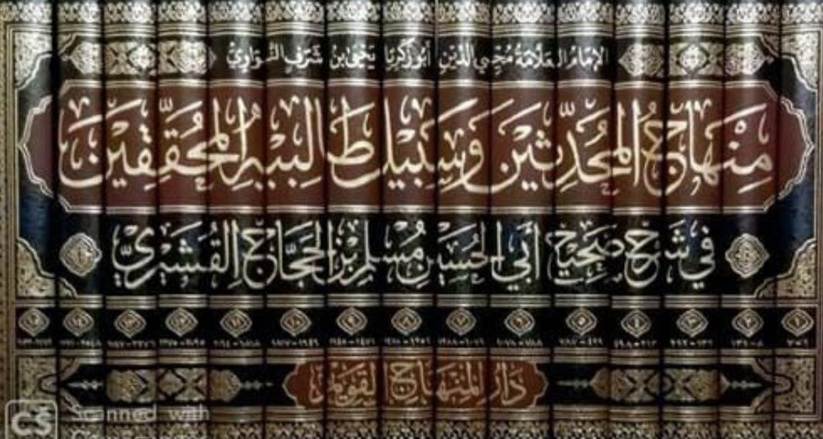
It is mentioned by some that Imām ʿAbd al-ʿAzīz b. Bāz re-read Imām al-Nawawī’s explanation of Ṣaḥīḥ Muslim more than 60 times.

Source: al-Nawawī, Muḥyī al-Dīn Abī Zakariyyā Yaḥyá b. Sharaf. Minhāj al-Muḥaddithīn wa Sabīl Ṭālibīh al-Muḥaqqiqīn fī Sharḥ Ṣaḥīḥ Abī al-Ḥusayn Muslim b. al-Ḥajjāj al-Qushayrī, ed. Māzin b. Muḥammad al-Sirsāwī. Damascus: Dār al-Minhāj (1441/2020), v.1, p. 127.

Prohibition of Innovations

In the Name of Allāh, all praise is due to Allāh, may praise and protection be upon the Messenger of Allāh.

To proceed:

In this article I present some proofs indicating the prohibition of innovations in the Dīn of Islām. I also added some statements of the Salaf highlighting the pernicious effects of such innovations.

This article will be useful for refuting innovations: please feel free to use in your khuṭbahs, lectures, social media platforms etc.

Islām is Perfect and Complete

الْيَوْمَ أَكْمَلْتُ لَكُمْ دِيْنَكُمْ وَأَتْمَمْتُ عَلَيْكُمْ نِعْمَتِي وَرَضِيْتُ لَكُمُ الْإِسْلَامَ دِيْنًا [المائدة (٥) : ٣].

{This day I have perfected for you your religion, and completed My favour upon you, and have chosen Islām as your religion} [al-Māʾidah (5): 3].

عَنْ عَبْدِ اللهِ مَسْعُودٍ قَالَ : قَالَ رَسُولُ اللهِ ﷺ : إِنَّهُ لَيْسَ شَيْءٌ يُقَرِّبُكُمْ إِلَىٰ الْجَنَّةِ إِلَّا قَدْ أَمَرْتُكُمْ بِهِ، وَلَيْسَ شَيْءٌ يُقَرِّبُكُمْ إِلَىٰ النَّارِ إِلَّا قَدْ نَهَيْتُكُمْ عَنْهُ

ʿAbd Allāh b. Masʿūd (d. 32) reported that the Messenger of Allāh ﷺ said, “Indeed there is nothing which will bring you closer to Paradise except that I have command you with it, and there is nothing which will bring you closer to the Fire except that I have prohibited you from it.” reported by al-Ḥākim and others.

Ḥasan: Ibn Abī Shaybah (35473), al-Ḥākim in al-Mustadrak (2168) ed. Dār al-Taʾṣīl, al-Baghawī in Sharḥ al-Sunnah (4110) and (4111), al-Bayhaqī in Shuʿab al-Īmān (10376) and Abū Bakr al-Ḥaddād in al-Muntakhab min Fawāʾid Ibn ʿAlawayh al-Qaṭṭān. See: al-Ṣaḥīḥah (2866) of al-Albānī.

Additions to Islām Are Completely Rejected

عَنْ عَائِشَةَ قَالَتْ : قَالَ رَسُولُ اللهِ ﷺ : (( مَنْ أَحْدَثَ فِي أَمْرِنَا هٰذَا مَا لَيْسَ مِنْهُ فَهُوَ رَدٌّ )) . مُتَّفَقٌ عَلَيْهِ، وَاللَّفْظُ لِمُسْلِمٍ

ʿĀʾishah, may Allāh pleased with her, reported that the Messenger of Allāh ﷺ said, “Whoever innovates into this matter of ours that which is not from it, it is rejected.” Agreed upon, and the wording is that of Muslim.

al-Bukhārī (2697) and Muslim (1718 (17)).

عَنْ عَائِشَةَ : أَنَّ رَسُولَ اللهِ ﷺ قَالَ : (( مَنْ عَمِلَ عَمَلًا لَيْسَ عَلَيْهِ أَمْرُنَا فَهُوَ رَدٌّ )) . رَوَاهُ مُسْلِمٌ

She also reported that the Messenger of Allāh ﷺ said, “Whoever does a deed which is not in conformity with our affair, it is rejected.” Reported by Muslim.

Muslim (1718 (18)).

Innovations Imply the Prophet ﷺ Failed to Fulfil the Message

قَالَ ابْنُ مَاجِشُونَ : سَمِعْتُ مَالِكًا يَقُولُ : (( مَنِ ابْتَدَعَ فِي الْإِسْلَامِ بِدْعَةً يَرَاهَا حَسَنَةً؛ فَقَدْ زَعَمَ أَنَّ مُحَمَّدا ﷺ خَانَ الرِّسَالَةَ؛ لِأَنَّ اللهَ يَقُولُ : ﴿الْيَوْمَ أَكْمَلْتُ لَكُمْ دِيْنَكُمْ﴾، فَمَا لَمْ يَكُنْ يَوْمَئِذٍ دِيْنًا؛ فَلَا يَكُونُ الْيَوْمَ دِيْنًا ))

al-Shāṭibī (d. 790) mentions in al-Iʿtiṣām (1: 62, ed. Mashhūr Ḥasan) that Ibn al-Mājishūn (d. 164) reported that he heard Imām Mālik (d. 179) say,

“Whoever innovates an innovation into Islām, seeing it as something good, then he has claimed that Muḥammad betrayed the message because Allāh says {This day I have perfected for you your religion}, so that which was not religion on that day, then it is not religion today.”

No Such Thing as a Good Innovation

قَالَ رَسُولُ اللهِ ﷺ : (( وَكُلَّ بِدْعَةٍ ضَلَالَةٌ )) . رَوَاهُ أَبُو دَاوُدَ

The Prophet ﷺ said, in the famous ḥadīth of ʿIrbāḍ b. Sāriyah, “Every innovation is misguidance.” Reported by Abū Dāwūd.

Ṣaḥīḥ: Abū Dāwūd (4607).

قَالَ عَبْدُ اللهِ بْنُ عُمَرَ : (( كُلُّ بِدْعَةٍ ضَلَالَةٌ وَإِنْ رَآهَا النَّاسُ حَسَنَةً )) . أَخْرَجَهُ اللَّالِكَائِيُّ وَغَيْرُهُ

ʿAbd Allāh b. ʿUmar said, “Every innovation is misguidance even if people see it to be good.” Reported by al-Lālikāʾī.

al-Lālikāʾī in Sharḥ Iʿtiqād Ahl al-Sunnah wa al-Jamāʿah (126), ed. al-Dumayjī.

عَنْ [سَعِيْدِ] بْنِ الْمُسَيِّبِ : أَنَّهُ رَأَىٰ رَجُلاً يُكْثِرُ الرُّكُوعَ بَعْدَ طُلُوعِ الْفَجْرِ فَنَهَاهُ ، فَقَالَ : يَا أَبَا مُحَمَّدٍ! أَيُعَذِّبُنِي اللهُ عَلَىٰ الصَّلَاةِ؟ قَالَ : (( لَا، وَلٰكِنْ يُعَذِّبُكَ عَلَىٰ خِلَافِ السُّنَّةِ )) . رَوَاهُ عَبْدُ الرَّزَّاقِ

One of the Imāms of the Tābiʿīn, Saʿīd b. al-Musayyib (d. 94), saw a man praying multiple units after the time of Fajr had entered. He prohibited him from doing so as one is only permitted to pray the two recommended units of Fajr before the obligatory prayer. The man turned around to him and said, “O Abū Muḥammad, will Allāh punish me for praying?” Saʿīd b. al-Musayyib replied, “No, but He will punish you for opposing the Sunnah!” Reported by ʿAbd al-Razzāq in his Muṣannaf (4807) ed. Dār al-Taʾṣīl.

1658 – Gratitude Begets Blessings

1658 – Gratitude Begets Blessings

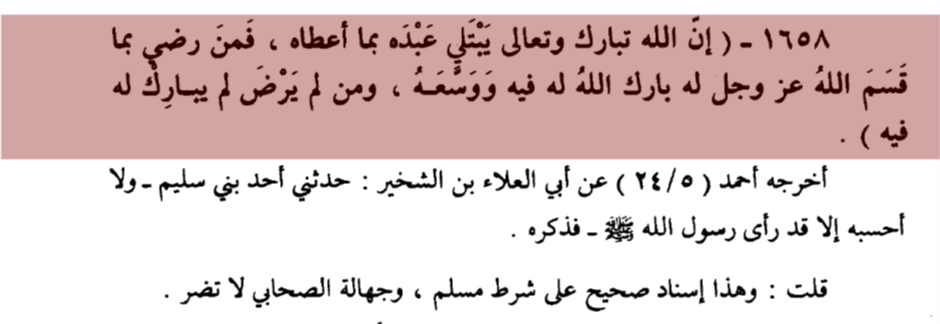
حَدَّثَنَا إِسْمَاعِيْلُ : عَنْ يُونُسَ : حَدَّثَنِي أَبُو الْعَلَاءِ بْنُ الشِّخِّيْرِ : حَدَّثَنِي أَحَدُ بَنِي سُلَيْمٍ – وَلَا أَحْسَبُهُ إِلَّا قَدْ رَأَىٰ رَسُولَ اللهِ ﷺ – قَالَ : قَالَ رَسُولُ اللهِ ﷺ : (( إِنَّ اللهَ يَبْتَلِي عَبْدَهُ بِمَا أَعْطَاهُ، فَمَنْ رَضِيَ بِمَا قَسَمَ اللهُ لَهُ، بَارَكَ اللهُ لَهُ فِيْهِ وَوَسَّعَهُ، وَمَنْ لَمْ يَرْضَ لَمْ يُبَارِكْ لَهُ )) . رَوَاهُ أَحْمَدُ.

Ismāʿīl narrated to us: from Yūnus: Abū al-ʿAlāʾ b. al-Shikhkhīr narrated to me: one of Banū Sulaym narrated to me – and I do not think except that he saw the Messenger of Allāh ﷺ – he said, “The Messenger of Allāh ﷺ said:

‘Indeed Allāh tests His slave with what He gave him, so whoever is pleased with what Allāh has apportioned him, Allāh blesses him therein and expands it, and whoever is not pleased, He does not bless him.”’

Reported by Aḥmad.

Ṣaḥīḥ: Aḥmad (5: 24) or (20279). See: al-Ṣaḥīḥah (1658) of al-Albānī wherein he says, “This is an authentic chain upon the condition of Muslims, and the anonymity of a Companion does no harm.”

Notes:

Everything you have in your life was divinely decreed for you by Allāh the All-Wise and All-Just before you were even born. The test lies in whether you will be pleased with Allāh’s Decree or be dissatisfied with it.

One who is pleased and content with what Allāh has divinely decreed for him, deserves to be blessed by Him, and increased in that because he submitted to His Lord’s decision.

One who is displeased and discontent with what Allāh has divinely decreed for him deserves to be left unblessed. It is as though such a person is angry with Allāh for not having apportioned for him more than he has been given. Thus, he is deserving of being deprived of blessings because he sees himself as deserving of more than what was decreed for him, and it is as if he objects to Allāh’s Wisdom.

This is a disease found mainly amongst materialistic individuals. Such people look down on what they have been apportioned by Allāh and consider it to be little. They look at what others have been given and consider it to be more and greater. Consequently, they constantly strive to increase their material lot, and squander their life and waste away their strength, and are beset with worry, anxiety, and fatigue. They blacken their scroll of deeds with their many sins due to becoming engrossed in their pursuit to acquire more of the dunyá, which they feel they deserve. What they do not realise is that they will only obtain what Allāh has decreed for them and no more, no matter how much they strive.

So, contentment of the heart is the key to success in this regard. Once a slave realises Allāh is All-Wise, All-Just, The Most Generous, and that He does not oppress anyone, the heart finds peace with every decree of His. The slave becomes more appreciate of what he has and strives to be grateful to his Lord for His immense generosity and kindness. He realises he does not deserve any of blessings he has been given and so feels deeply indebted to his Lord. Such a slave of Allāh does not feel entitled – he feels that his Lord is entitled to every atom of gratitude he can muster for His kindness.

See: Fayḍ al-Qadīr Sharḥ al-Jāmiʿ al-Ṣaghīr by al-Munāwī, DKI edition, ḥadīth number: 1843.