ʿAbd Allāh b. Masʿūd, may Allāh be pleased with him, said, “Moderation in the Sunnah is better than striving in innovation.” Reported by al-Ḥākim.
Ṣaḥīḥ Mawqūf: al-Ḥākim (357), Ibn Baṭṭah in al-Ibānah (201), and al-Marwazī in al-Sunnah (p. 30).
ʿAbd Allāh b. Masʿūd, may Allāh be pleased with him, said, “Moderation in the Sunnah is better than striving in innovation.” Reported by al-Ḥākim.
Ṣaḥīḥ Mawqūf: al-Ḥākim (357), Ibn Baṭṭah in al-Ibānah (201), and al-Marwazī in al-Sunnah (p. 30).
Aḥmad b. Manṣūr al-Ramādī (d. 265) said, “I went out with Aḥmad b. Ḥanbal (d. 241) and Yaḥyá b. Maʿīn (d. 233) to ʿAbd al-Razzāq (d. 211), as their servant.
When we returned to al-Kūfah, Yaḥyá b. Maʿīn said to Aḥmad b. Ḥanbal, “I want to test Abū Nuʿaym (d. 218/19).” Aḥmad said to him, “You don’t want to, the man is trustworthy.” Yaḥyá b. Maʿīn said, “No, I must.” So he took a piece of paper and wrote 30 ḥadīths on it from the ḥadīths of Abū Nuʿaym, and he placed at the head of every ten traditions, a ḥadīth that was not from his ḥadīths.
They then came to Abū Nuʿaym and knocked on the door, so he came out and sat on a clay bench opposite his door. He took Aḥmad b. Ḥanbal and sat him on his right, and he took Yaḥyá b. Maʿīn and sat him on his left, then I sat below the bench.
Then Yaḥyá b. Maʿīn took out the sheet of paper and read ten ḥadīths to him while Abū Nuʿaym stayed silent. He then read the eleventh, and Abū Nuʿaym said, “This is not from my ḥadīth – cross it out.” He then read the second ten while Abū Nuʿaym stayed silent. Then he read the second ḥadīth and Abū Nuʿaym said, “This is not from my ḥadīth – cross it out.” Then he read the third ten and read the third ḥadīth, and Abū Nuʿaym changed and his eyes rolled backed. He turned to Yaḥyá b. Maʿīn and said, “As for this one – and Aḥmad b. Ḥanbal’s forearm was in his hand – he is too pious to do something like this, and as for this one – meaning me – he is too insignificant to do something like this, but this is your doing o doer!” He then took out his leg and kicked Yaḥyá b. Maʿīn, knocking him off the bench. He then got up and entered his house.
Aḥmad said to Yaḥyá, “Did I not forbid you from the man and tell you he was reliable?” he said, “By Allāh, his kicking me is dearer to me than my journey.”
Reported by al-Khaṭīb al-Baghdādī in Tārīkh Baghdād (14: 315-316) ed. Bashshār ʿAwwād Maʿrūf.
Sh. ʿUthaymīn, may Allāh have mercy upon him, was asked about mentioning individuals by name, the evil deeds they used to do, and how Allāh dealt with them, and whether that falls under backbiting.
He, may Allāh have mercy upon him, replied:
“Yes, mentioning the dead with respect to their evil deeds was prohibited by the Messenger, upon him be praise and protection, for he said, ‘Do not speak badly of the dead, for they have reached the result of what they have sent forth.’ [al-Bukhārī (1329)]. Rather, pardon and forgiveness is sought from Allāh for them, it may be that his supplication is answered for them, thereby Allāh forgives them and pardons them. As for mentioning their evil deeds, then they are to be mentioned in an unspecified manner, so it is said, for example, in warning against interest, ‘Have you not seen people who violated the prohibitions of Allāh and they engaged in dealing with interest, then they departed from this worldly life and none of their wealth was buried with them, rather they left it behind for others, thus the spoil is for others and the loss is for them?’ and what is similar to that by which the living can take heed, as for mentioning him specifically, then this is not permissible.”
Fatāwá Nūr ʿalá al-Darb (12: 487, no. 6679).
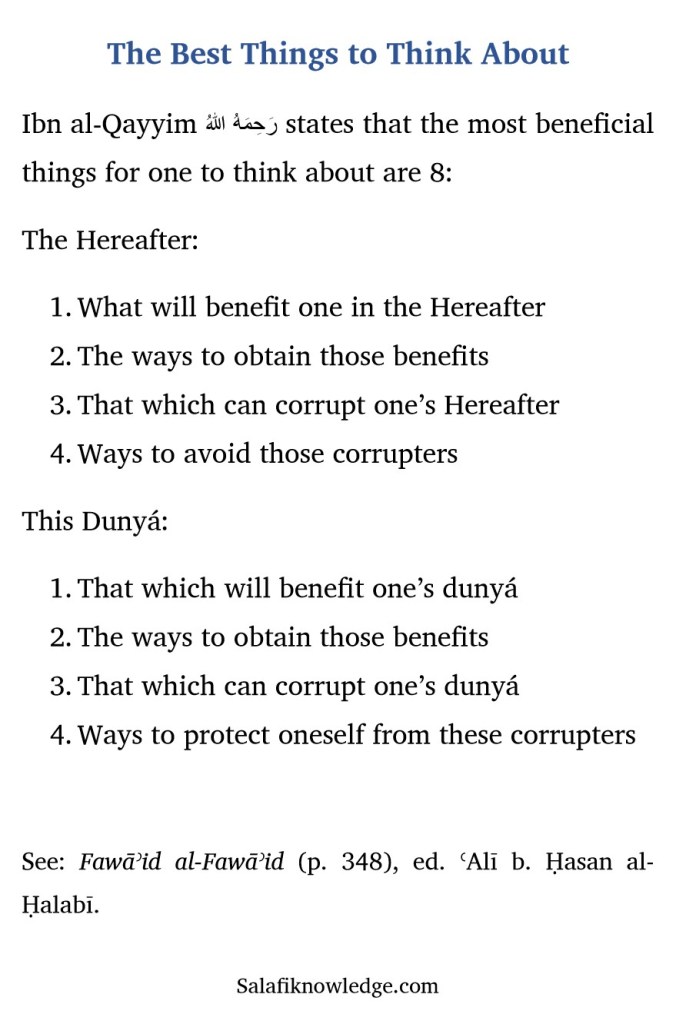
Sh. al-ʿUthaymīn رَحِمَهُ اللهُ was asked how a Muslim should hold himself to account. The Shaykh mentioned the following points:
He should reflect over:
For example:
This is how one holds himself to account with respect to what he did and what he failed to do, in order to straighten any crookedness and remove any evil – this is the meaning of holding oneself to account.
Source: Fatāwá Nūr ʿalá al-Darb li Faḍīlat al-Shaykh al-ʿAllāmah Muḥammad b. Ṣāliḥ al-ʿUthaymīn, 12: 16, no. 6190.
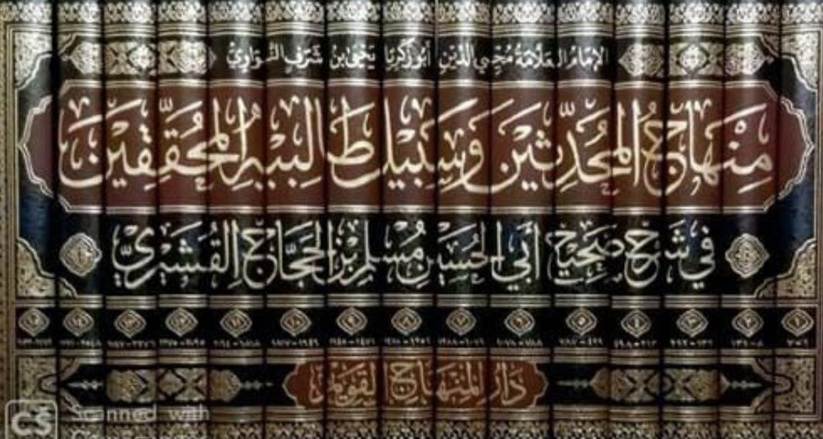
It is mentioned by some that Imām ʿAbd al-ʿAzīz b. Bāz re-read Imām al-Nawawī’s explanation of Ṣaḥīḥ Muslim more than 60 times.

Source: al-Nawawī, Muḥyī al-Dīn Abī Zakariyyā Yaḥyá b. Sharaf. Minhāj al-Muḥaddithīn wa Sabīl Ṭālibīh al-Muḥaqqiqīn fī Sharḥ Ṣaḥīḥ Abī al-Ḥusayn Muslim b. al-Ḥajjāj al-Qushayrī, ed. Māzin b. Muḥammad al-Sirsāwī. Damascus: Dār al-Minhāj (1441/2020), v.1, p. 127.
In the Musnad of Ibn al-Jaʿd (1: 275, no. 41) edited by ʿAbd al-Hādī, the following dream is mentioned:
ʿAlī b. Mus-hir said that he and Ḥamzah al-Zayyāt (d. 156/8) heard 500 or so traditions from Abān b. Abī ʿAyyāsh.
Ḥamzah told ʿAlī, “I saw the Prophet ﷺ in a dream and presented them to him; he did not recognise any of them except a few – five or six – aḥādīth, so I abandoned [taking] ḥadīth from him.”
Although transmitters and their reports are not graded based upon dreams, this particular dream was sound because the Imāms of Jarḥ and Taʿdīl (Accreditation and Impugnment), who investigated Abān’s reports, said the following regarding him:
Yaḥyá b. Maʿīn (d. 233) said, “Weak.”
He also said, “His ḥadīth are nothing.”
He also said, “Abān is abandoned in ḥadīth.”
Aḥmad b. Ḥanbal (d. 241) said, “Abān b. Abī ʿAyyāsh is abandoned in ḥadīth, people abandoned his ḥadīth from long ago. When Wakīʿ would come across his ḥadīth, he would say, ‘a man’ and not name him due to deeming him weak.”
Aḥmad b. Ḥumayd said he heard Aḥmad b. Ḥanbal say, “Nothing should be written from Abān b. Abī ʿAyyāsh.” Ibn Ḥumayd said, “Is he affected by innovation?” He replied, “He was rejected in ḥadīth.”
ʿAmr b. ʿAlī (d. 249) said, “Abandoned in ḥadīth, although he is a righteous man.”
He also said, “Yaḥyá [b. Maʿīn] and ʿAbd al-Raḥmān [b. Mahdī] would not narrate from him.”
al-Bukhārī (d. 256) said, “Shuʿbah (d. 160) used to think poorly of him.”
When Abū Zurʿah (d. 264) was asked whether Abān lied deliberately, he replied, “No, he used to hear ḥadīth from Anas [b. Mālik], Shahr [b. Ḥawshab], and al-Ḥasan [al-Baṣrī], and then not make a distinction between them.”
Abū Ḥātim al-Rāzī (d. 277) said, “Abandoned in ḥadīth, and he was a righteous man, however he was afflicted with a poor memory.”
al-Nasāʾī (d. 303) said, “Abandoned in ḥadīth.” He also said, “Unreliable, and his ḥadīth are not [to be] written down.”
See: Tahdhīb al-Kamāl of al-Mizzī (2: 19 onwards) ed. Bashshār ʿAwwād Maʿrūf.
In the Name of Allāh, all praise is due to Allāh, may praise and protection be upon the Messenger of Allāh.
To proceed:
In this article I present some proofs indicating the prohibition of innovations in the Dīn of Islām. I also added some statements of the Salaf highlighting the pernicious effects of such innovations.
This article will be useful for refuting innovations: please feel free to use in your khuṭbahs, lectures, social media platforms etc.
الْيَوْمَ أَكْمَلْتُ لَكُمْ دِيْنَكُمْ وَأَتْمَمْتُ عَلَيْكُمْ نِعْمَتِي وَرَضِيْتُ لَكُمُ الْإِسْلَامَ دِيْنًا [المائدة (٥) : ٣].
{This day I have perfected for you your religion, and completed My favour upon you, and have chosen Islām as your religion} [al-Māʾidah (5): 3].
عَنْ عَبْدِ اللهِ مَسْعُودٍ قَالَ : قَالَ رَسُولُ اللهِ ﷺ : إِنَّهُ لَيْسَ شَيْءٌ يُقَرِّبُكُمْ إِلَىٰ الْجَنَّةِ إِلَّا قَدْ أَمَرْتُكُمْ بِهِ، وَلَيْسَ شَيْءٌ يُقَرِّبُكُمْ إِلَىٰ النَّارِ إِلَّا قَدْ نَهَيْتُكُمْ عَنْهُ
ʿAbd Allāh b. Masʿūd (d. 32) reported that the Messenger of Allāh ﷺ said, “Indeed there is nothing which will bring you closer to Paradise except that I have command you with it, and there is nothing which will bring you closer to the Fire except that I have prohibited you from it.” reported by al-Ḥākim and others.
Ḥasan: Ibn Abī Shaybah (35473), al-Ḥākim in al-Mustadrak (2168) ed. Dār al-Taʾṣīl, al-Baghawī in Sharḥ al-Sunnah (4110) and (4111), al-Bayhaqī in Shuʿab al-Īmān (10376) and Abū Bakr al-Ḥaddād in al-Muntakhab min Fawāʾid Ibn ʿAlawayh al-Qaṭṭān. See: al-Ṣaḥīḥah (2866) of al-Albānī.
عَنْ عَائِشَةَ قَالَتْ : قَالَ رَسُولُ اللهِ ﷺ : (( مَنْ أَحْدَثَ فِي أَمْرِنَا هٰذَا مَا لَيْسَ مِنْهُ فَهُوَ رَدٌّ )) . مُتَّفَقٌ عَلَيْهِ، وَاللَّفْظُ لِمُسْلِمٍ
ʿĀʾishah, may Allāh pleased with her, reported that the Messenger of Allāh ﷺ said, “Whoever innovates into this matter of ours that which is not from it, it is rejected.” Agreed upon, and the wording is that of Muslim.
al-Bukhārī (2697) and Muslim (1718 (17)).
عَنْ عَائِشَةَ : أَنَّ رَسُولَ اللهِ ﷺ قَالَ : (( مَنْ عَمِلَ عَمَلًا لَيْسَ عَلَيْهِ أَمْرُنَا فَهُوَ رَدٌّ )) . رَوَاهُ مُسْلِمٌ
She also reported that the Messenger of Allāh ﷺ said, “Whoever does a deed which is not in conformity with our affair, it is rejected.” Reported by Muslim.
Muslim (1718 (18)).
قَالَ ابْنُ مَاجِشُونَ : سَمِعْتُ مَالِكًا يَقُولُ : (( مَنِ ابْتَدَعَ فِي الْإِسْلَامِ بِدْعَةً يَرَاهَا حَسَنَةً؛ فَقَدْ زَعَمَ أَنَّ مُحَمَّدا ﷺ خَانَ الرِّسَالَةَ؛ لِأَنَّ اللهَ يَقُولُ : ﴿الْيَوْمَ أَكْمَلْتُ لَكُمْ دِيْنَكُمْ﴾، فَمَا لَمْ يَكُنْ يَوْمَئِذٍ دِيْنًا؛ فَلَا يَكُونُ الْيَوْمَ دِيْنًا ))
al-Shāṭibī (d. 790) mentions in al-Iʿtiṣām (1: 62, ed. Mashhūr Ḥasan) that Ibn al-Mājishūn (d. 164) reported that he heard Imām Mālik (d. 179) say,
“Whoever innovates an innovation into Islām, seeing it as something good, then he has claimed that Muḥammad betrayed the message because Allāh says {This day I have perfected for you your religion}, so that which was not religion on that day, then it is not religion today.”
قَالَ رَسُولُ اللهِ ﷺ : (( وَكُلَّ بِدْعَةٍ ضَلَالَةٌ )) . رَوَاهُ أَبُو دَاوُدَ
The Prophet ﷺ said, in the famous ḥadīth of ʿIrbāḍ b. Sāriyah, “Every innovation is misguidance.” Reported by Abū Dāwūd.
Ṣaḥīḥ: Abū Dāwūd (4607).
قَالَ عَبْدُ اللهِ بْنُ عُمَرَ : (( كُلُّ بِدْعَةٍ ضَلَالَةٌ وَإِنْ رَآهَا النَّاسُ حَسَنَةً )) . أَخْرَجَهُ اللَّالِكَائِيُّ وَغَيْرُهُ
ʿAbd Allāh b. ʿUmar said, “Every innovation is misguidance even if people see it to be good.” Reported by al-Lālikāʾī.
al-Lālikāʾī in Sharḥ Iʿtiqād Ahl al-Sunnah wa al-Jamāʿah (126), ed. al-Dumayjī.
عَنْ [سَعِيْدِ] بْنِ الْمُسَيِّبِ : أَنَّهُ رَأَىٰ رَجُلاً يُكْثِرُ الرُّكُوعَ بَعْدَ طُلُوعِ الْفَجْرِ فَنَهَاهُ ، فَقَالَ : يَا أَبَا مُحَمَّدٍ! أَيُعَذِّبُنِي اللهُ عَلَىٰ الصَّلَاةِ؟ قَالَ : (( لَا، وَلٰكِنْ يُعَذِّبُكَ عَلَىٰ خِلَافِ السُّنَّةِ )) . رَوَاهُ عَبْدُ الرَّزَّاقِ
One of the Imāms of the Tābiʿīn, Saʿīd b. al-Musayyib (d. 94), saw a man praying multiple units after the time of Fajr had entered. He prohibited him from doing so as one is only permitted to pray the two recommended units of Fajr before the obligatory prayer. The man turned around to him and said, “O Abū Muḥammad, will Allāh punish me for praying?” Saʿīd b. al-Musayyib replied, “No, but He will punish you for opposing the Sunnah!” Reported by ʿAbd al-Razzāq in his Muṣannaf (4807) ed. Dār al-Taʾṣīl.
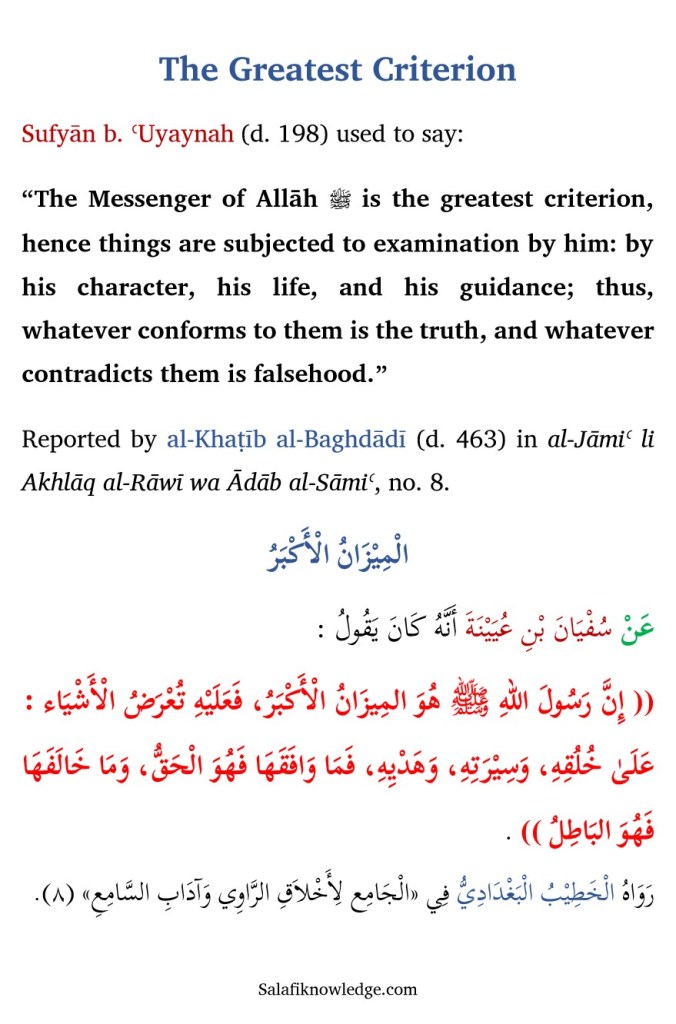
1658 – Gratitude Begets Blessings
حَدَّثَنَا إِسْمَاعِيْلُ : عَنْ يُونُسَ : حَدَّثَنِي أَبُو الْعَلَاءِ بْنُ الشِّخِّيْرِ : حَدَّثَنِي أَحَدُ بَنِي سُلَيْمٍ – وَلَا أَحْسَبُهُ إِلَّا قَدْ رَأَىٰ رَسُولَ اللهِ ﷺ – قَالَ : قَالَ رَسُولُ اللهِ ﷺ : (( إِنَّ اللهَ يَبْتَلِي عَبْدَهُ بِمَا أَعْطَاهُ، فَمَنْ رَضِيَ بِمَا قَسَمَ اللهُ لَهُ، بَارَكَ اللهُ لَهُ فِيْهِ وَوَسَّعَهُ، وَمَنْ لَمْ يَرْضَ لَمْ يُبَارِكْ لَهُ )) . رَوَاهُ أَحْمَدُ.
Ismāʿīl narrated to us: from Yūnus: Abū al-ʿAlāʾ b. al-Shikhkhīr narrated to me: one of Banū Sulaym narrated to me – and I do not think except that he saw the Messenger of Allāh ﷺ – he said, “The Messenger of Allāh ﷺ said:
‘Indeed Allāh tests His slave with what He gave him, so whoever is pleased with what Allāh has apportioned him, Allāh blesses him therein and expands it, and whoever is not pleased, He does not bless him.”’
Reported by Aḥmad.
Ṣaḥīḥ: Aḥmad (5: 24) or (20279). See: al-Ṣaḥīḥah (1658) of al-Albānī wherein he says, “This is an authentic chain upon the condition of Muslims, and the anonymity of a Companion does no harm.”
Notes:
Everything you have in your life was divinely decreed for you by Allāh the All-Wise and All-Just before you were even born. The test lies in whether you will be pleased with Allāh’s Decree or be dissatisfied with it.
One who is pleased and content with what Allāh has divinely decreed for him, deserves to be blessed by Him, and increased in that because he submitted to His Lord’s decision.
One who is displeased and discontent with what Allāh has divinely decreed for him deserves to be left unblessed. It is as though such a person is angry with Allāh for not having apportioned for him more than he has been given. Thus, he is deserving of being deprived of blessings because he sees himself as deserving of more than what was decreed for him, and it is as if he objects to Allāh’s Wisdom.
This is a disease found mainly amongst materialistic individuals. Such people look down on what they have been apportioned by Allāh and consider it to be little. They look at what others have been given and consider it to be more and greater. Consequently, they constantly strive to increase their material lot, and squander their life and waste away their strength, and are beset with worry, anxiety, and fatigue. They blacken their scroll of deeds with their many sins due to becoming engrossed in their pursuit to acquire more of the dunyá, which they feel they deserve. What they do not realise is that they will only obtain what Allāh has decreed for them and no more, no matter how much they strive.
So, contentment of the heart is the key to success in this regard. Once a slave realises Allāh is All-Wise, All-Just, The Most Generous, and that He does not oppress anyone, the heart finds peace with every decree of His. The slave becomes more appreciate of what he has and strives to be grateful to his Lord for His immense generosity and kindness. He realises he does not deserve any of blessings he has been given and so feels deeply indebted to his Lord. Such a slave of Allāh does not feel entitled – he feels that his Lord is entitled to every atom of gratitude he can muster for His kindness.
See: Fayḍ al-Qadīr Sharḥ al-Jāmiʿ al-Ṣaghīr by al-Munāwī, DKI edition, ḥadīth number: 1843.