3002 – “Indeed, the heavenly wives (ḥūr) in Paradise will sing and say: ‘We are beautiful and good heavenly wives, we have been gifted to noble husbands’”.
Reported by al-Bukhārī in al-Tārīkh al-Kabīr (4/1/16), Ibn Abī Dāwūd in al-Baʿth wa al-Nushūr (75), and al-Ṭabarānī in al-Awsaṭ (6642) via Ibn Abī Fudayk: from Ibn Abī al-Dhiʾb: from ʿAwn b. al-Khaṭṭāb b. ʿAbd Allāh b. Rāfiʿ: from a son of Anas b. Mālik: that Anas b. Mālik…in marfūʿ form [raised to the Prophet ﷺ].
ʿAbd al-Raḥmān b. ʿAwf (d. 32): A senior Companion of the Prophet ﷺ, one of the first of eight to accept Islām, one of the ten given glad tidings of al-Jannah by the Prophet ﷺ, made hijrah to al-Ḥabashah because of Makkan persecution, paired with Saʿd b. al-Rabīʿah in a bond of brotherhood in al-Madīnah who offered to split everything he had in half with him, he went into trading instead and became extremely wealthy and was amazingly generous in supporting the Prophet ﷺ and the Muslims.
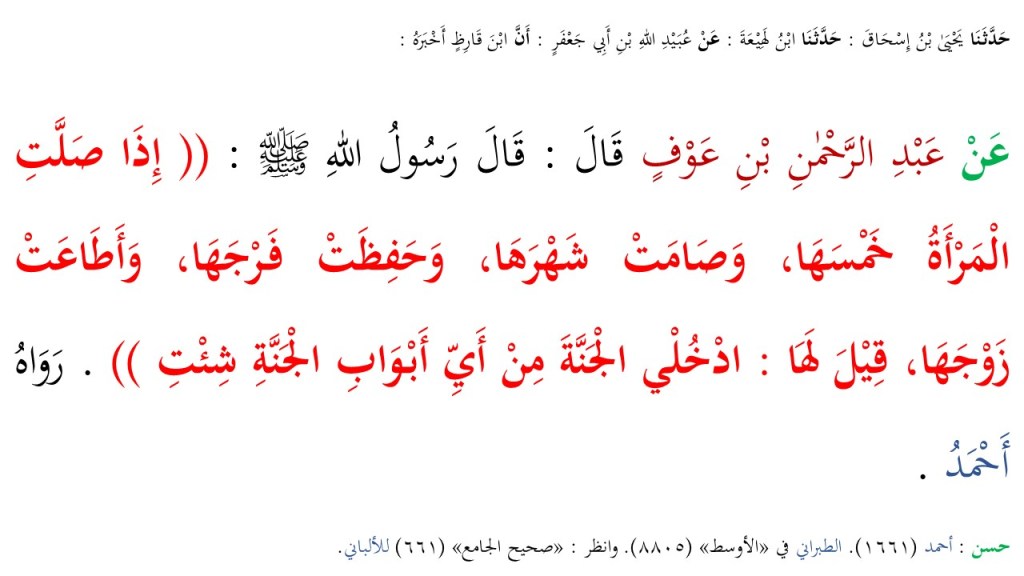
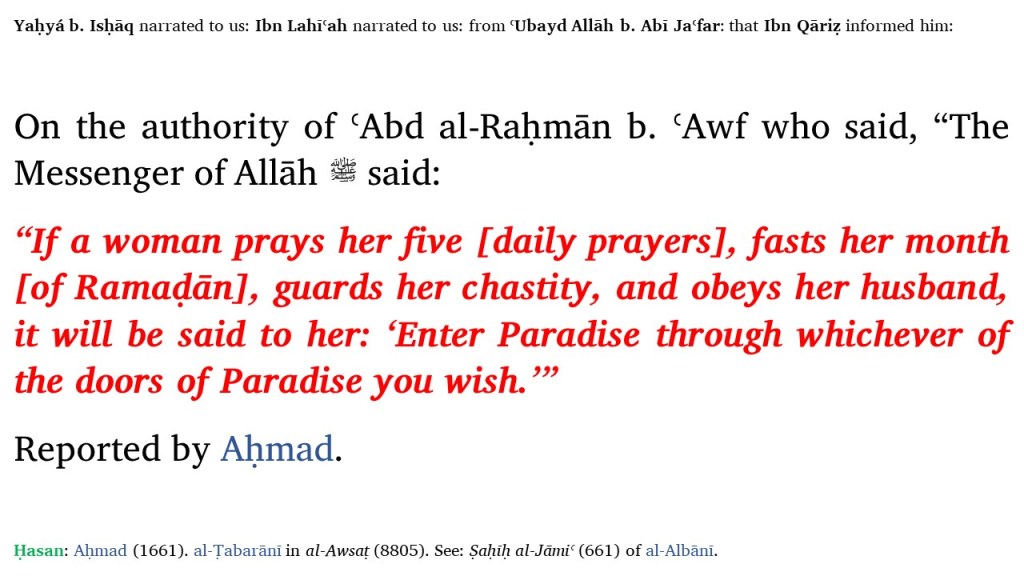
“If a woman”i.e., a Muslim woman, for the deeds of a non-Muslim are not accepted by Allāh until they believe.
“prays her five”the five daily obligatory prayers unless she is menstruating (al-ḥayḍ) or experience post-natal bleeding (al-nifās). This contains an encouragement for her to take the prayers extremely seriously and not to be negligent. She should ensure she fulfils the conditions (shurūṭ), pillars (arkān) and obligations (wājibāt) of prayer in order for her prayers to be accepted.
“fasts her month”the month of Ramaḍān except for the days of her menstruation which she makes up after the completion of the month. This contains an encouragement for her to fast the month of Ramaḍān and to do so properly by fulfilling its conditions and obligations by staying away from its nullifiers and working to obtain the goal of Ramaḍān: al-taqwá (fear of Allāh).
“guards her chastity”from illegal sexual intercourse whether it be with a man who is not her husband, or a woman (siḥāq: lesbianism). The word used in the ḥadīth is farj (the private part) and this refers primarily to the front but also includes the back. This ḥadīth contains an encouragement for her to stay away from the means which lead to the loss of her chastity such as; being in complete privacy with a non-maḥram man, journeying on her own, touching a non-maḥram man, free-mixing with non-maḥram men etc.
“and obeys her husband”in everything related to his legal rights, unless he orders her to do something sinful, in which case she should not obey him because the Prophet ﷺ said, “There is no obedience to the creation when it involves disobedience to the Creator.” This also contains an encouragement for a woman to get married.
“it will be said to her” an announcement will be made for her, out of honour and respect for her because of the goodness she did in this dunyá, and the means she took to enter Paradise by pleasing her Lord.
“whichever of the doors of Paradise” and there are eight doors of Paradise.
Aḥmad: Ibn Ḥanbal (d. 241), the eponym of the Ḥanbalī legal school, Imām of Ahl al-Sunnah, Imām in ḥadīth and Imām in fiqh.
Some Other Lessons
The righteous woman who fulfils her obligations towards Allāh and then to her husband, holds a lofty status with her Lord. He will be pleased with her and give her the choice of entering through any of the doors of Paradise her heart desires.
The ḥadīth indicates the great status of these deeds because they are a means to acquiring a great reward: entry into Paradise through any door one wishes.
The deeds mentioned in this ḥadīth are obligatory deeds which she must fulfil otherwise, as with all obligations, non-fulfilment of obligations without a legal excuse is a cause of punishment in the Hereafter, which Allāh may choose to exercise if He wills.
She should not be rebuked if she fulfils these obligations and does not do more. Sh. ʿUthaymīn was asked regarding a mother who rebukes her married daughter for not memorising the Qurʾān even though she reads it regularly. The Shaykh stated: “As long as the wife is obedient towards Allāh the Almighty and Exalted, and to His Messenger, by fulfilling what is obligatory upon her in terms of the rights of blood-relatives and the rights of the husband; there is no blame on her, and it is not appropriate to scold her for not memorising the Qurʾān because memorisation of the Qurʾān may be difficult for some people especially the married woman who is busy with her husband and the house.

 Salafi Knowledge