
“And I Did Not Create Jinn and Mankind Except to Worship Me.”
In explaining the proof for al-Walāʾ wa al-Barāʾ (love, loyalty and allegiance to Allāh, and hatred, enmity and disassociation for His sake), Sh. Ibn Bāz states:


The connection between the “The First Matter” and this “Second Matter” is: Allāh brought you into existence and blessed you with everything to guarantee you success at a material level and a spiritual level, in this life and the next, and He told you about the noble purpose of your creation – to worship Him alone, and on top of that, He sent you guidance through a Messenger and a Book so that you would know how to worship Him, AND He promised you eternal happiness and enjoyment if you abide by His guidance. With that being the case, Allāh is not pleased with any partners being associated with Him when He ALONE did ALL of this for YOU. And this is what the “Second Matter” emphasises.
This is why He deserves to be worshipped alone. Sh. Ibn Bāz mentions that worship is the sole and exclusive right of Allāh. He quotes the following āyāt in this regard:


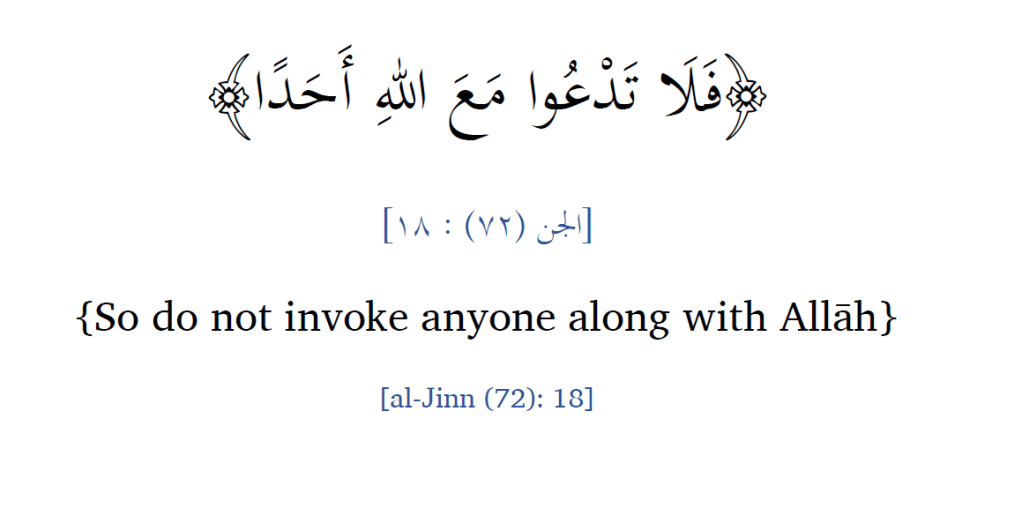
The first āyah quoted by the Shaykh tells us that Allāh has obligated us to worship Him alone. The second āyah tells us that we only have One True Deity (Ilāh) and the third āyah commands us not to associate anyone or anything with Allāh in our supplications, and as we know, supplication/invocation is worship and so the āyah means: do not worship anyone or anything along with Allāh.
Sh. Ibn Bāz explains {But Pharaoh disobeyed the Messenger, so We seized him with a severe punishment} with the following words:

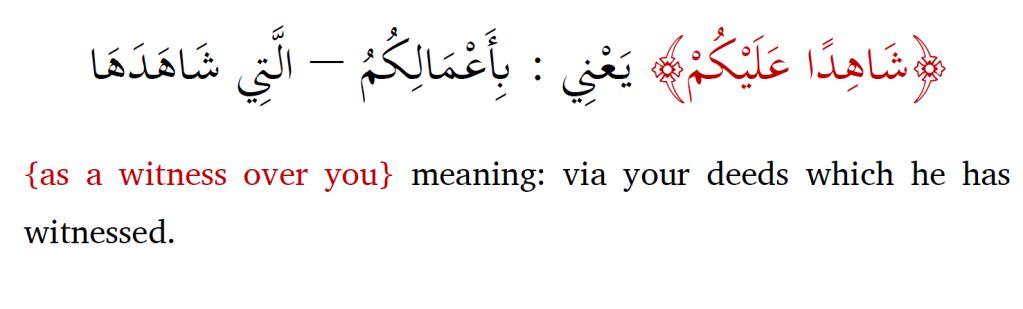
Sh. Ibn Bāz explains {as a witness over you} with the following words:
The “First Matter” of the “Three Matters” from Thalāthat-ul-Uṣūl refers to Tawḥīd al-Rubūbiyyah (making Allāh One in the Divinity of Lordship).
The point being made here is that Allāh is deserving of being worshipped alone because of the fact that He created us, provided for us, gave us a noble purpose and sent us guidance to achieve that purpose. So, essentially: Tawḥīd al-Rubūbiyyah necessitates Tawḥīd al-Ulūhiyyah/ʿIbādah.
Sh. Ibn Bāz emphasises the point that Allāh created us to worship Him alone, commanded us to do so, prohibited us from worshipping other than Him, and so all worship should be directed to Allāh alone. He gives examples of acts of worship Allāh has prescribed, and which can only be directed towards Him.
The Shaykh mentions supplication (al-duʿāʾ) as an example of an act of worship which cannot be directed to anyone other than Allāh. He states however, that seeking help from one who is present (ḥāḍir) and capable (qādir) is not worship. The proof for this is:

Sh. Ibn Bāz states that Mūsá (ʿalayhi al-salām) was capable of helping the man. In contrast though, he states, calling upon the dead, and the absent and incapable who cannot hear you, such as calling upon idols, jinns, trees etc, this, he says, was the shirk (polytheism) of the mushrikūn (polytheists), and this type of shirk they committed was the major shirk (al-shirk al-akbar).
Allāh the Exalted said the following regarding major shirk:
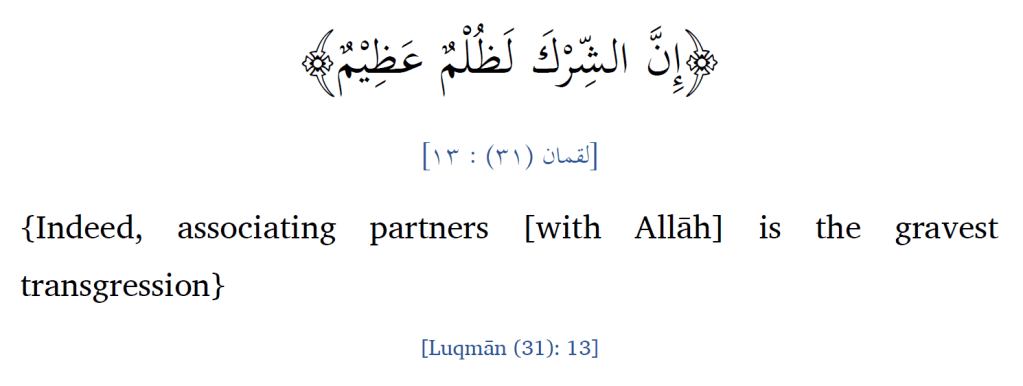


The first āyah mentioned by the Shaykh makes the point that shirk (associating partners with Allāh) is the worst sin one can perpetrate. The second and last āyah indicate that the deeds of the one who commits shirk are nullified, and will come to nothing. The third āyah indicates the gravity of shirk, and that Allāh does not forgive shirk. In his fatāwá, Sh. Ibn Bāz mentions that this refers to the one who dies upon shirk whilst not having repented from it. I ask Allāh to protect us all from falling into shirk.
Imām Muḥammad b. ʿAbd al-Wahhāb quotes Imām al-Shāfiʿī regarding Sūrah al-ʿAṣr in Thalāthat-ul-Uṣūl. Sh. Ibn Bāz notes that there is another narration of al-Shāfiʿī’s statement.
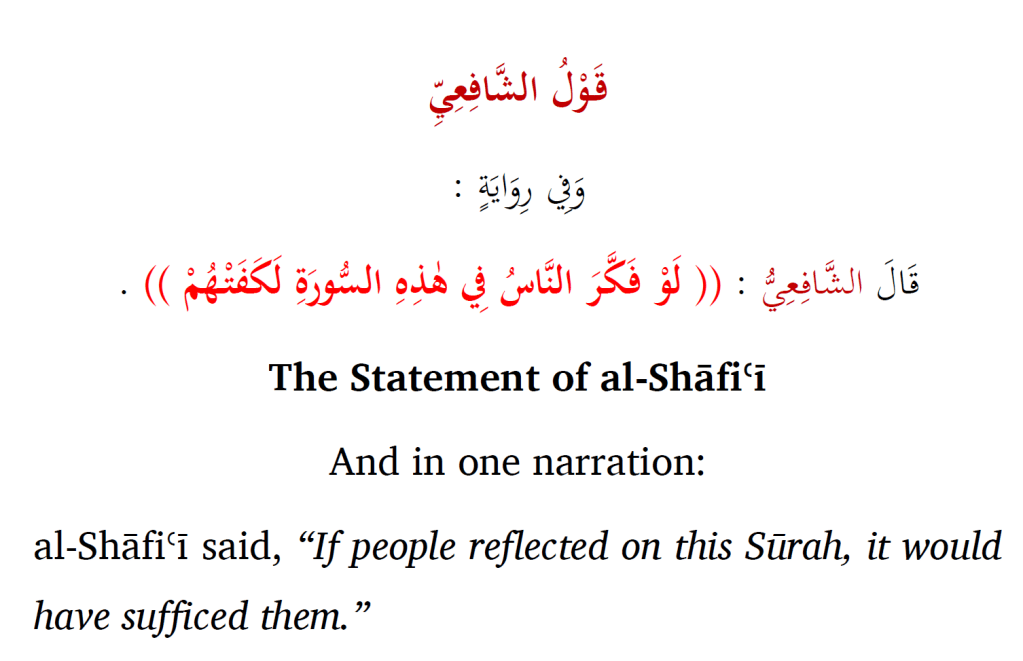
Imām Muḥammad b. ʿAbd al-Wahhāb states in “The Three Fundamental Principles” that the proof for the four matters is Sūrah al-ʿAṣr.
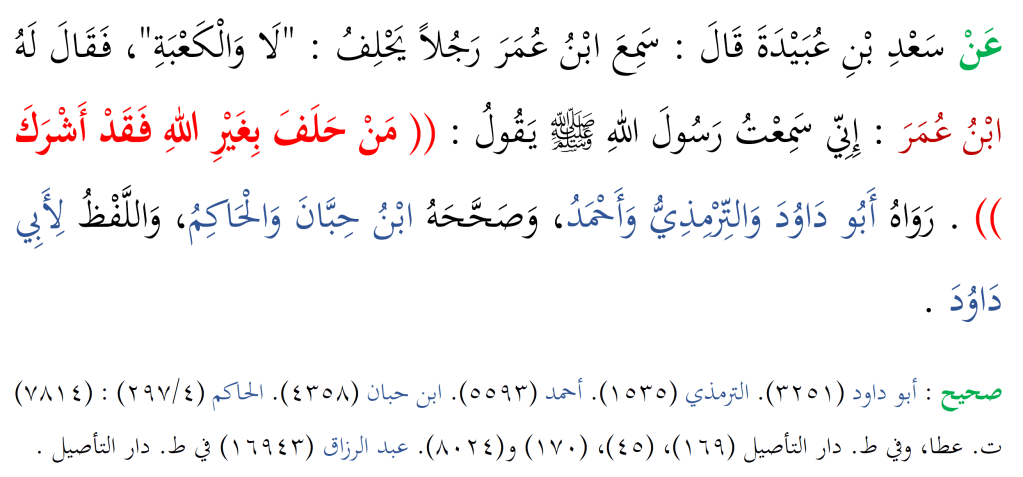
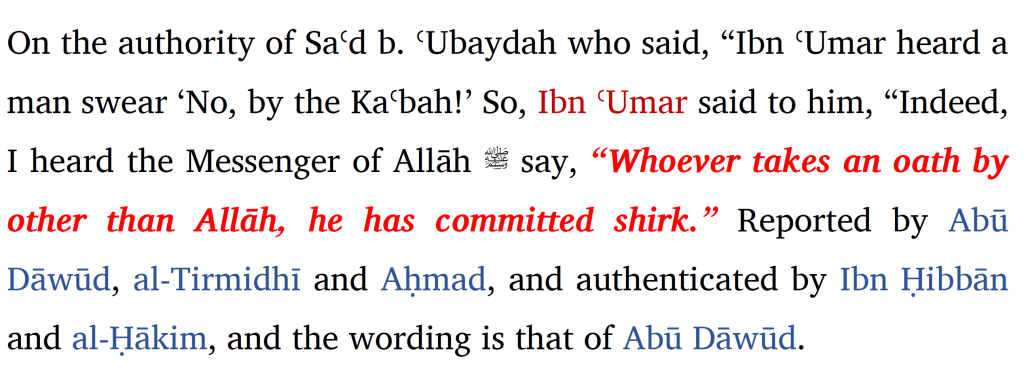
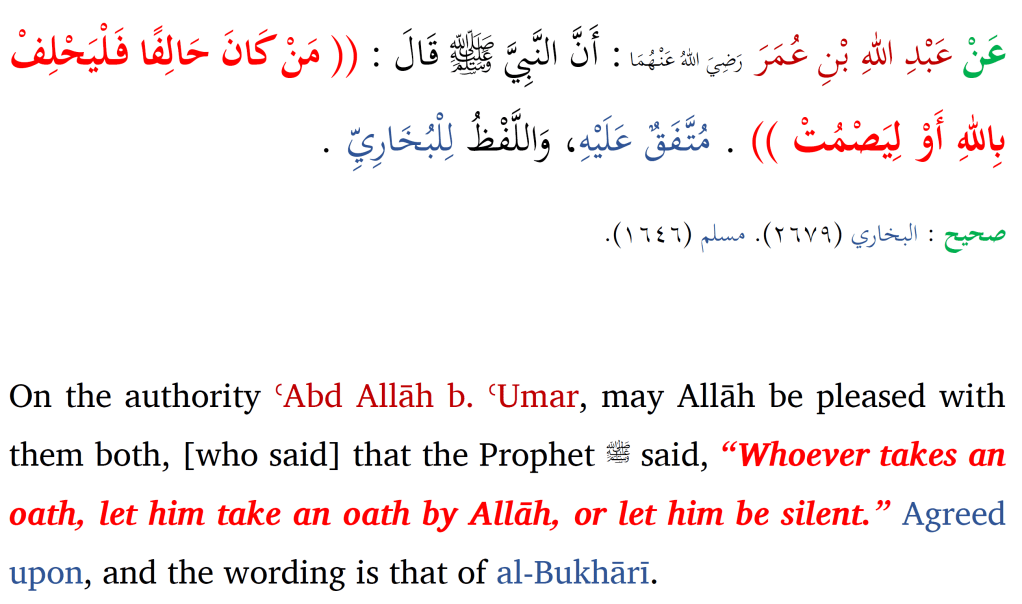
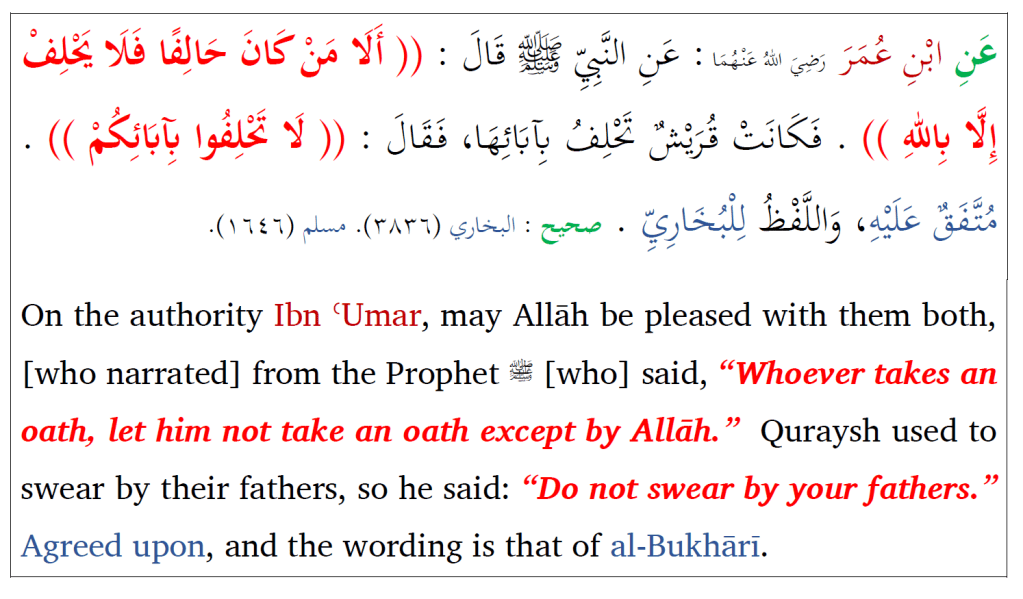
Allāh takes an oath by time which is a creation of His. Sh. Ibn Bāz clarifies to the reader, although Allāh can take an oath by whatever He wishes from amongst His creation, we, the creation, can only take an oath by Allāh. The proof for this is:
Imām Muḥammad b. ʿAbd al-Wahhāb states in “The Three Fundamental Principles” that the third area of knowledge we are obligated to learn is about Islām.
Allāh the Exalted created us to worship Him alone, until our very last breath: Allāh the Exalted said, {And We did not create the jinn and mankind except to worship Me}. He created us to devote our hearts, speech and actions to please Him, and gain closeness to Him alone.
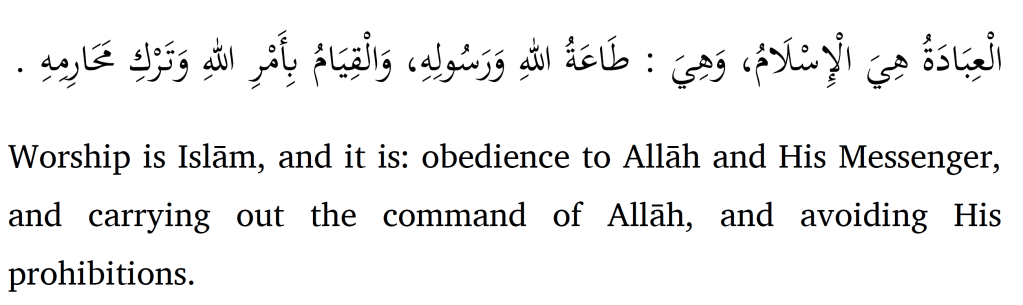
In order for us to achieve this, Allāh gave us a complete way of life which, if we live by, our every moment in life will become an act of worship and devotion to Allāh. On top of our prayers, charity, fasting and pilgrimage, our mundane and customary acts such as eating, drinking, sleeping, studying working, marrying, raising children, keeping the ties of kinship – all of these become acts of worship if we follow Islām.
This is why scholars such as Sh. Ibn Bāz said:



 Salafi Knowledge