The following is a translation of Imām al-Nawawī’s own introduction to his famous collection of forty traditions.

In the Name of Allāh, the Most Merciful, the Giver of Mercy
The venerable leader savant, the ascetic worshipper, the piously cautious, helper of the Religion, expounder of Islāmic Law of Greater Syria, the virtuous: Muḥyī al-Dīn Abū Zakariyyā Yaḥyā ibn Sharaf ibn Ḥasan ibn Ḥusayn al-Nawawī, may Allāh sanctify his soul and illuminate his grave, said:
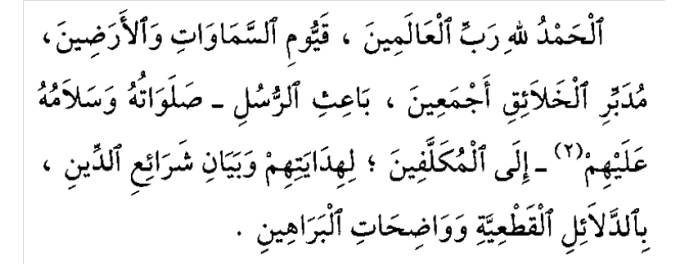
All praise is due to Allāh the Master of every created thing, the Self-Subsisting Maintainer of the heavens and the earths, Manager of all of creation, Sender of the Messengers – His praise and security be upon them – to the subjects of the Law for their guidance and clarifying the Divine Legislations of the Religion with conclusive evidence and manifestly evident proofs.
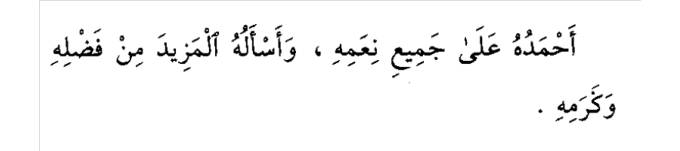
I praise Him for all of His blessings and I implore Him for more of His favours and generosity.

I bear witness that there is none worthy of worship except He, the One, the Subjugator, the Generous and the Oft-Forgiving.

And I bear witness that Muḥammad is His slave and His Messenger, His beloved and His intimate friend, the best of creation, the one ennobled with the distinguished Qurʾān, the continuous miracle through the years and with the enlightening Prophetic practices for those seeking guidance, the one who has been singled out with comprehensive speech and the bountifulness of the Religion.

The praises of Allāh and His protection be upon him and the rest of the Prophets, and upon the family of all and the rest of the righteous.

To proceed:

We have related from ʿAlī ibn Abī Ṭālib, ʿAbd Allāh ibn Masʿūd, Muʿādh ibn Jabal, Abū al-Dardāʾ, Ibn ʿUmar, Ibn ʿAbbās, Anas ibn Mālik, Abū Hurayrah and Abū Saʿīd al-Khudrī, may Allāh be pleased with them all, from numerous routes with varying narrations: that the Messenger of Allāh, praise and security of Allāh be upon him, said:
“Whoever preserves for my Ummah, forty traditions relating to a matter of its religion, Allāh the Exalted will resurrect him on the Day of Standing amongst the group of jurists and scholars.”
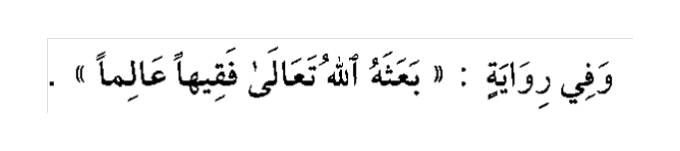
In one narration: “Allāh the Exalted will resurrect Him as an erudite jurist.”

In the narration of Abū al-Dardāʾ: “And I will be an interceding witness for him on the Day of Standing.”
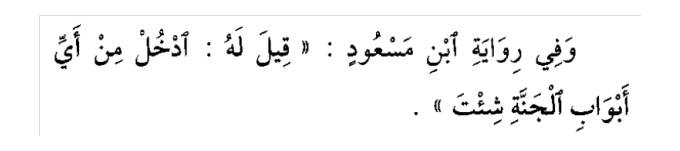
In the narration of Ibn Masʿūd: “It will be said to him: “Enter from whichever of the Gates of Paradise you wish.”

In the narration of Ibn ʿUmar: “He will be written amongst the scholars and assembled amidst the group of martyrs.” The leading memorisers have reached an agreement that it is a weak tradition even though its routes are numerous.
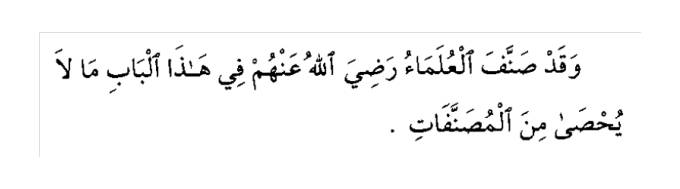
On this topic, the scholars, may Allāh be pleased with them, have composed works which cannot be enumerated.

The first to have authored regarding it, from those I know [include]: ʿAbd Allāh ibn al-Mubārak, then Muḥammad ibn Aslam al-Ṭūsī the nurturing savant, then al-Ḥasan ibn Sufyān al-Nasawī, Abū Bakr al-Ājurrī, Abū Bakr Muḥammad ibn Ibrāhīm al-Aṣbahānī, al-Dāraquṭnī, al-Ḥākim,
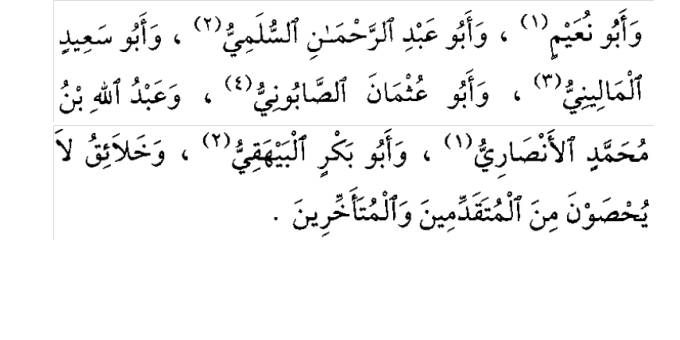
…Abū Nuʿaym, Abū ʿAbd al-Raḥmān al-Sulamī, Abū Saʿīd al-Mālīnī, Abū ʿUthmān al-Ṣābūnī, ʿAbd Allāh ibn Muḥammad al-Anṣārī, Abū Bakr al-Bayhaqī and others who cannot be enumerated from the ancients and later ones.

I sought guidance from Allāh the Exalted in compiling forty traditions; imitating these leading notables and master memorisers of Islām.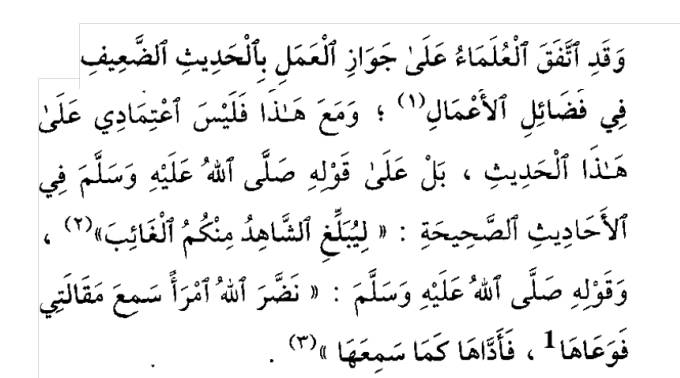
The scholars have agreed upon the permissibility of practising weak traditions regarding virtuous actions. Despite this, my dependence has not been upon this ḥadīth but upon his statement, praise and security of Allāh be upon him, in authentic traditions: “Let the one who is present convey to those amongst you who are absent” and his statement, praise and security of Allāh be upon him: “May Allāh illuminate a person who hears my speech, preserves it and conveys it just as he heard it.”

Thereafter, amongst some of the scholars are those who compiled forty regarding the fundamentals of the Religion, some of them regarding the practical matters[i], some of them regarding Jihād, some of them regarding asceticism, some of them regarding manners and some of them regarding sermons and all of them are of righteous objectives, may Allāh be pleased with those who intended such.
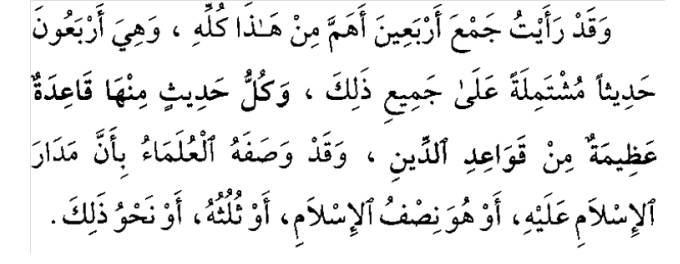
I deemed it appropriate to compile forty which are more important than them all: forty traditions which cover all of them. Every one of its tradition is an immense principle from the maxims of the religion, and which the scholars have described as being the pivot around which Islām revolves, or that it is half of Islām, or a third of it and the like.
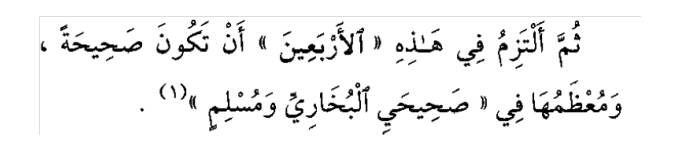
I then determined that these ((Forty)) should be authentic, and most of them are in the ((Two Authentic Collections of al-Bukhārī and Muslim)).
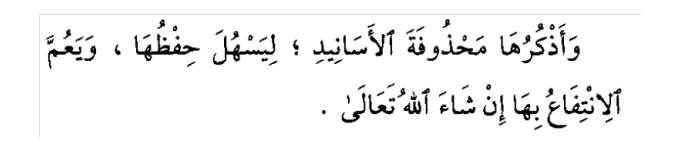
I mention them without their chains to facilitate their memorisation and to make it universally accessible in benefitting from them if Allāh the Exalted wills.
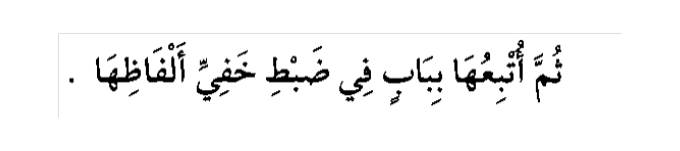
I then appended a chapter accurately treating its obscure words.
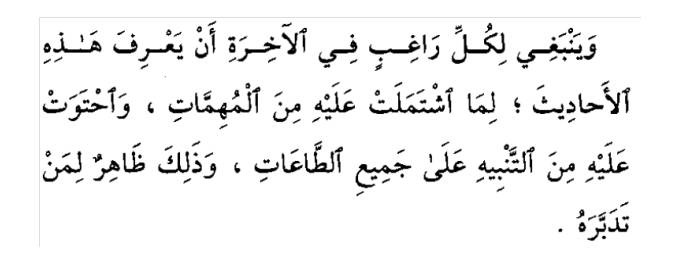
It is necessary for every desirer of the Hereafter to know these traditions, due to the important matters they contain and the exhortation to all acts of obedience, and this is obvious to the one who contemplates it.
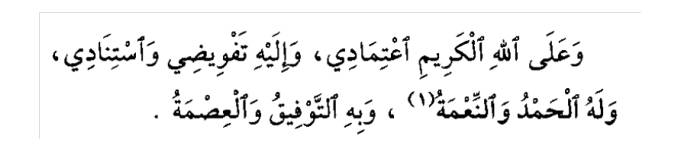
And upon Allāh the Generous is my reliance, to Him is my relegation and dependence, to Him belongs all praise and blessings, and through Him is facilitation and protection.

Source: al-Nawawī, Muḥyī al-Dīn Abū Zakariyyā Yaḥyā b. Sharaf. al-Arbaʿūn al-Nawawiyyah. Eds. Qaṣiyy Muḥammad Nūr Ḥallāq and Anwar b. Abū Bakr al-Shaykhī. Jeddah: Dār al-Minhāj, 1430/2009. Print.
[i] Although al-furūʿ linguistically means subsidiary, branch and secondary, I have chosen to translate the word as ‘practical matters’ because of Shaykh al-Islām Ibn Taymiyyah’s view, that the division of the religion into fundamental and secondary matters is something which has no basis from the Salaf. Additionally, it gives the impression, matters which are furūʿ are less fundamental than matters which are described as being from the uṣūl. So, prayer, fasting, zakāh fall under matters which are practical i.e. furūʿ whilst matters of belief and ʿaqīdah fall under the uṣūl.
 Salafi Knowledge