The “First Matter” of the “Three Matters” from Thalāthat-ul-Uṣūl refers to Tawḥīd al-Rubūbiyyah (making Allāh One in the Divinity of Lordship).
The point being made here is that Allāh is deserving of being worshipped alone because of the fact that He created us, provided for us, gave us a noble purpose and sent us guidance to achieve that purpose. So, essentially: Tawḥīd al-Rubūbiyyah necessitates Tawḥīd al-Ulūhiyyah/ʿIbādah.
Sh. Ibn Bāz emphasises the point that Allāh created us to worship Him alone, commanded us to do so, prohibited us from worshipping other than Him, and so all worship should be directed to Allāh alone. He gives examples of acts of worship Allāh has prescribed, and which can only be directed towards Him.
The Shaykh mentions supplication (al-duʿāʾ) as an example of an act of worship which cannot be directed to anyone other than Allāh. He states however, that seeking help from one who is present (ḥāḍir) and capable (qādir) is not worship. The proof for this is:

Sh. Ibn Bāz states that Mūsá (ʿalayhi al-salām) was capable of helping the man. In contrast though, he states, calling upon the dead, and the absent and incapable who cannot hear you, such as calling upon idols, jinns, trees etc, this, he says, was the shirk (polytheism) of the mushrikūn (polytheists), and this type of shirk they committed was the major shirk (al-shirk al-akbar).
Allāh the Exalted said the following regarding major shirk:
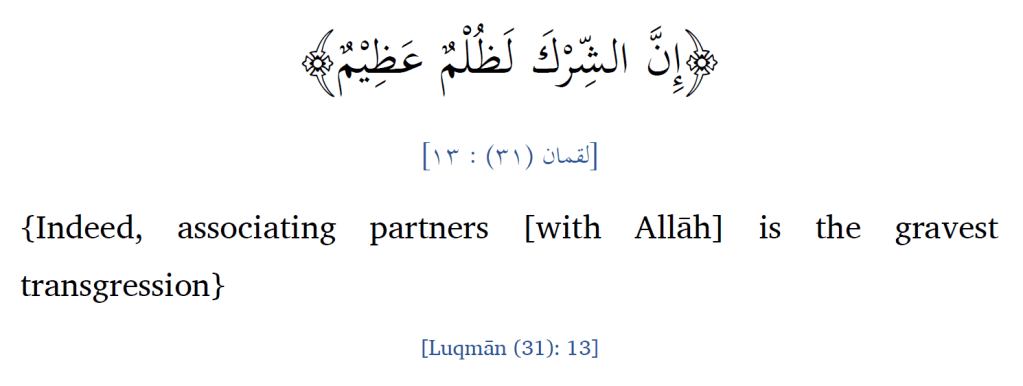


The first āyah mentioned by the Shaykh makes the point that shirk (associating partners with Allāh) is the worst sin one can perpetrate. The second and last āyah indicate that the deeds of the one who commits shirk are nullified, and will come to nothing. The third āyah indicates the gravity of shirk, and that Allāh does not forgive shirk. In his fatāwá, Sh. Ibn Bāz mentions that this refers to the one who dies upon shirk whilst not having repented from it. I ask Allāh to protect us all from falling into shirk.
 Salafi Knowledge