The takbīr for ʿĪd al-Fiṭr is said from the moment one leaves his home until he reaches the prayer place, and he should stop when the Imām arrives. Shaykh al-Albānī authenticates a number of reports on this issue in his Irwāʾ al-Ghalīl (1: 121, no. 649 onwards). I will add these reports in full another time in shāʾa Allāh.
There are no specific words reported from the Prophet ﷺ for the takbīr of the two ʿĪds.
The most authentically reported takbīr is that of Salmān al-Fārisī, may Allāh be pleased with him, as recorded by ʿAbd al-Razzāq in which he said, “Say takbīr, Allāh is the Greatest, Allāh is the Greatest, Allāh is the Greatest [in all] Greatness.” See: al-ʿAwāyishah in his al-Mawsūʿah al-Fiqhiyyah (2: 418). This is the report collected by al-Bayhaqī through ʿAbd al-Razzāq al-Ṣanʿānī:
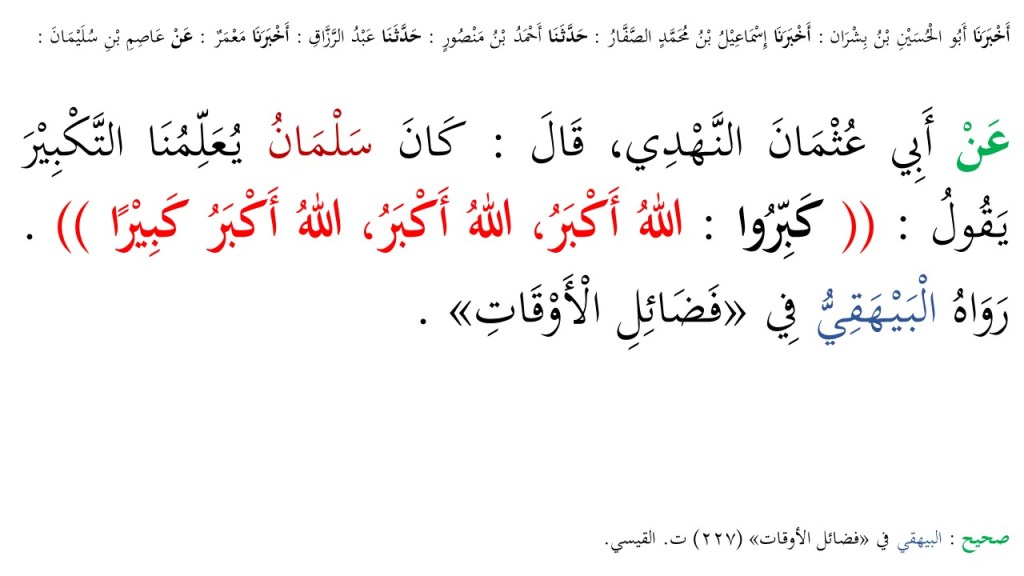
On the authority of Abū ʿUthmān al-Nahdī who said, “Salmān used to teach us the takbīr saying, “Say takbīr: “Allāh is the Greatest, Allāh is the Greatest, Allāh is the Greatest [in all] Greatness.” Reported by al-Bayhaqī in Faḍāʾil al-Awqāt (The Virtues of Time).
In his Irwāʾ al-Ghalīl (1: 125ff) Sh. al-Albānī (d. 1420) mentions other authentically reported wordings of the takbīr from the Righteous Salaf:
The first, and most famous takbīr is that of the Companion ʿAbd Allāh b. Masʿūd (d. 32), may Allāh be pleased with him. There are two forms of the takbīr in which “Allāhu Akbar” is said either twice or thrice. The first report is recorded by Ibn Abī Shaybah as follows:

On the authority of ʿAbd Allāh [b. Masʿūd] that he used to say takbīr during the Days of al-Tashrīq: “Allāh is the Greatest, Allāh is the Greatest, there is none worthy of worship except Allāh, and Allāh is the Greatest, Allāh is the Greatest, and all praise is due to Allāh.” Reported by Ibn Abī Shaybah.
The second report which mentions “Allāhu Akbar” thrice is also recorded by Ibn Abī Shaybah and is as follows:

On the authority of al-Aswad who said, “ʿAbd Allāh [b. Masʿūd] used to say takbīr from the Fajr prayer on the Day of ʿArafah until the ʿAṣr prayer on the Day of Sacrifice, saying: “Allāh is the Greatest, Allāh is the Greatest, Allāh is the Greatest, there is none worthy of worship except Allāh, and Allāh is the Greatest, Allāh is the Greatest, and all praise is due to Allāh.” Reported by Ibn Abī Shaybah.
The Shaykh then mentions Ibn ʿAbbās’s takbīr as recorded by al-Bayhaqī:
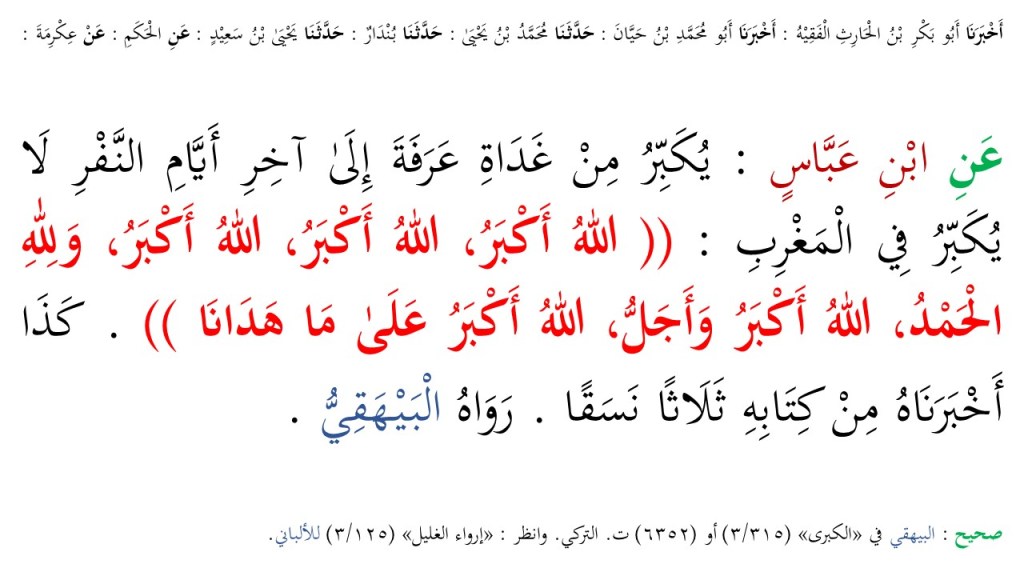
On the authority of Ibn ʿAbbās [who] used to say takbīr from the morning of ʿArafah until the end of the days of al-Nafr and not say takbīr for Maghrib [using the words]: “Allāh is the Greatest, Allāh is the Greatest, and all praise is due to Allāh, Allāh is the Greatest and Most Sublime, Allāh is the Greatest due to what He has guided us.” Reported by al-Bayhaqī in his al-Kubrá.
Another version of Ibn ʿAbbās’s takbīr, states the Shaykh, is recorded by Ibn Abī Shaybah as follows:

On the authority of Ibn ʿAbbās who used to say: “Allāh is the Greatest [in all] greatness, Allāh is the Greatest [in all] greatness, Allāh is the Greatest and Most Sublime, Allāh is the Greatest, and to Allāh belongs all praise.” Reported by Ibn Abī Shaybah.
The Shaykh then states that al-Maḥāmilī has an addition to this takbīr of Ibn ʿAbbās which is as follows:
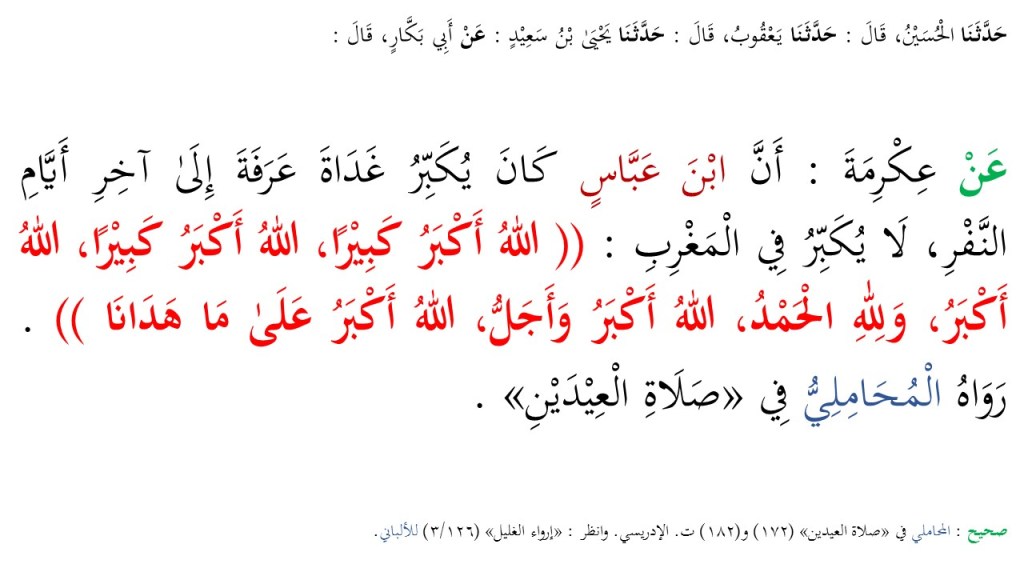
On the authority of ʿIkrimah [who said] that Ibn ʿAbbās used to say takbīr on the morning of ʿArafah until the end of the days of al-Nafr and not say takbīr for Maghrib [using the words]: “Allāh is the Greatest [in all] greatness, Allāh is the Greatest [in all] greatness, Allāh is the Greatest, and to Allāh belongs all praise, Allāh is the Greatest and Most Sublime, Allāh is the Greatest due to what He has guided us.” Reported by al-Maḥāmilī in Ṣalāt al-ʿĪdayn (The Prayer of the Two Eids).
So, these are the wordings of the takbīr which Shaykh al-Albānī states are authentically reported from the Salaf.
And all praise is due to Allāh.
 Salafi Knowledge